What Should Be in a School Trip First Aid Kit?
The exact contents will depend on the number and age of the students, the itinerary and the school's own policies. The UK's Department for Education (DfE) and Health and Safety Executive (HSE) provide guidance on basic first-aid supplies.
A practical school trip first-aid kit may include:
- Plasters and sterile dressings
- Gauze pads and bandages
- Medical tape
- Antiseptic or cleansing wipes
- Disposable gloves
- An instant cold pack
- Eye wash or sterile eye pads
- First-aid scissors
- Triangular bandages
- Safety pins
- A CPR face shield
- Disposable face masks
- Basic first-aid instructions
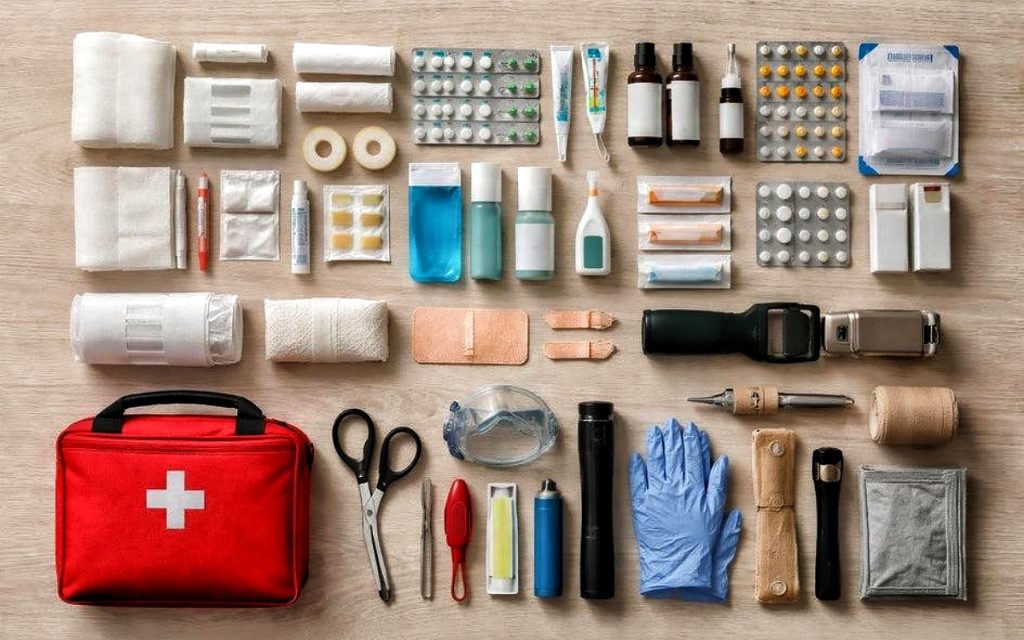
Travel first aid kit with bandages, sterile dressings, gloves and medical tape
This is a suggested checklist, not a mandatory packing list. The final contents should reflect the school's first-aid needs assessment and planned activities.
Before departure, somebody should physically check the kit. Packaging can become damaged, sterile items can be opened accidentally, and products may have expired since the previous trip. It is a small job, but it should not be left until the group is already on the way to the airport.
Additional First Aid Needs for Travel in China
Schools should also consider the activities and weather conditions during the trip.
For example, summer visits to Beijing or Xi'an may involve high temperatures and long periods outdoors, so access to drinking water and shaded rest stops should be planned. Walking along the Great Wall may require extra attention to minor cuts, blisters and slips, particularly on steep or uneven steps.
For multi-city tours, essential first-aid supplies should remain accessible during coach transfers, high-speed rail journeys and domestic flights. Schools should also check transport security restrictions on scissors, liquids and medication before departure.
Managing Student Medication During School Trips to China
Schools need a separate procedure for medicines.
If a student needs prescription medication, allergy medication or emergency medicine, the school should know exactly who is carrying it, who is authorised to supervise it and how it needs to be stored.
Medicines should normally remain in their original labelled packaging. The group leader should also have the relevant medical information and emergency contact details. The school should check current Chinese customs and airline requirements before departure, particularly for controlled medicines.
For students with severe allergies, emergency medication and response procedures should be agreed with parents and the school's responsible staff before travelling.
A local guide can help communicate with a hospital, pharmacy or transport provider, but should not diagnose a condition or decide which medicine a student should take.
These responsibilities should be agreed between the school, parents and travel organiser before the journey.
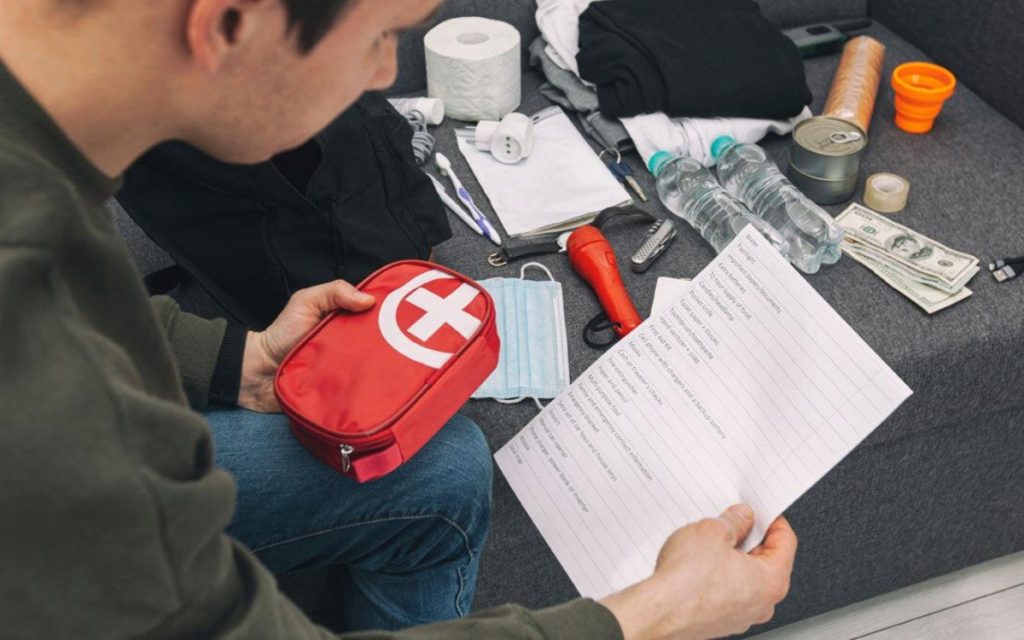
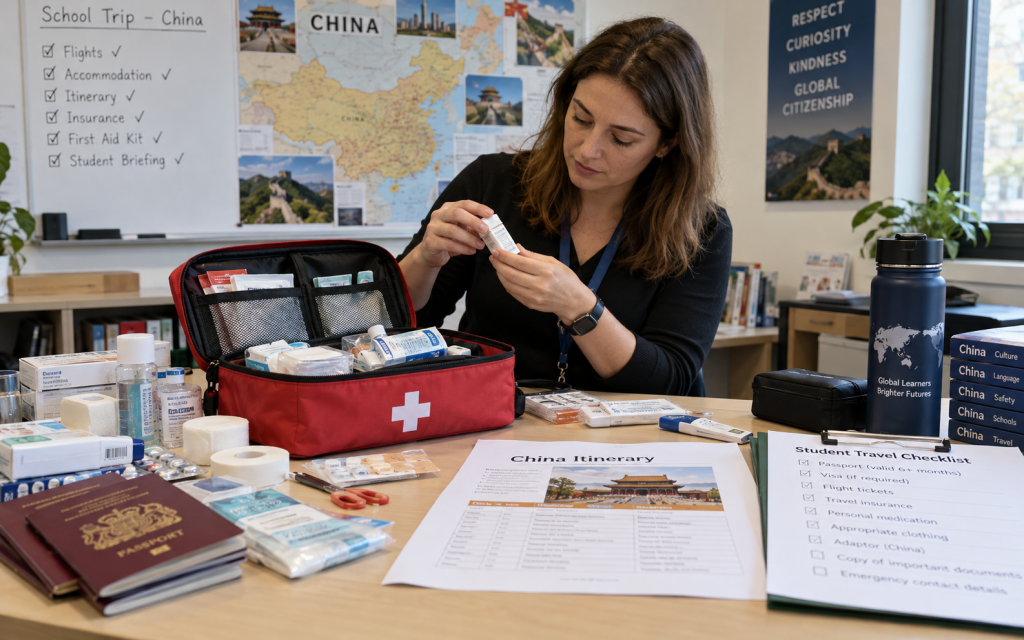
Teacher checking a first aid kit and travel documents before a school trip to China
Can School Groups Rely on the Coach First Aid Kit?
Coaches used for tour groups may carry basic emergency supplies, but this should not replace the school's own first-aid kit.
The coach may not stay with the group during every visit, and different vehicles are often used in different cities. The school's kit should therefore travel with the group leader.
Medical Emergency Planning for School Trips to China
The first-aid kit is only one part of the group's safety arrangements. Before arrival, the school and the China travel organiser should also confirm what will happen if a student becomes unwell or needs medical attention.
Schools remain responsible for student medical information, medication arrangements and staff supervision. The local China travel organiser can assist with hospital contacts, transport, language support and coordination with the travel insurer when needed.
The group leaders should have:
- Local emergency contact numbers
- Travel insurance information
- Students' relevant medical and allergy information
- Parent or guardian contact details
- A clear internal reporting procedure
The school and local operator should also identify suitable medical facilities along the route and agree on transport and language assistance arrangements.
The local operator in China can help arrange transport, translation and communication with a medical facility. Clear roles help everyone respond appropriately.
In a previous Beijing student group medical emergency case study, TravelChinaService assisted teachers in coordinating with a travel insurer and local medical services when a student became unwell during a school trip. This illustrates why local communication and medical support arrangements matter.
Checking the first-aid kit before a school trip helps clarify responsibility, medication arrangements and emergency support. Appoint one person to check and carry the kit before departure.
For schools and travel organisers planning educational visits to China, TravelChinaService provides local ground services for school trips, including transport, accommodation, guides and emergency coordination support.