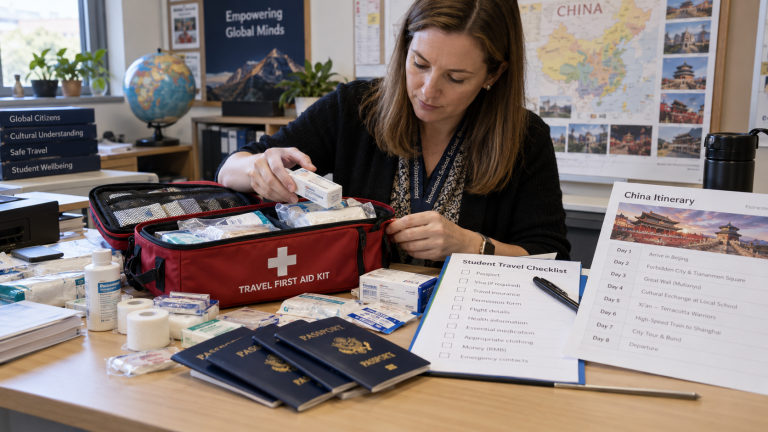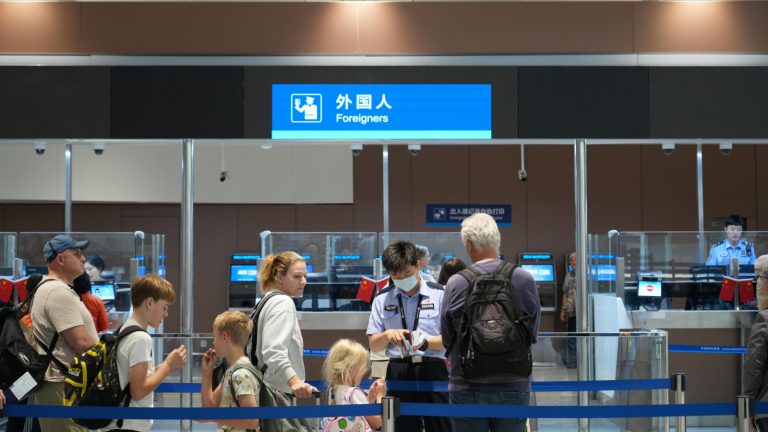

Organizing a student group trip to China requires more preparation than arranging hotels, coaches, guides and attraction tickets for a regular leisure group.
When requesting a quotation from a China tour operator, we advise overseas travel partners and schools to collect essential information about every student. This information allows Chinese operator to plan meals, emergency support, weather preparation and appropriate ground arrangements before the group arrives.
Some details, particularly emergency contacts, insurance information, food allergies and medical conditions, may become critical if a student becomes unwell during the trip.
The following checklist is by us, intended for schools, educational institutions and overseas travel agents planning school trips to China.
1. Collect Emergency Contact Details for Every Student
The school or organising travel agency should obtain complete emergency contact information from the parent or legal guardian of each student.
The information should include:
- Parent or guardian’s full name
- Relationship to the student
- Primary mobile telephone number
- Alternative telephone number
- Email address
- Home country and time zone
- A second emergency contact where possible
The lead teacher and designated chaperones should carry this information throughout the trip.
A secure copy should also be available to you. Relevant emergency details should be shared with the China tour operator before arrival, subject to the school’s privacy and data-protection procedures.
The local operator does not need unrestricted access to every piece of personal information. However, it should have enough verified information to support the teachers if urgent contact with a parent becomes necessary.
2. Confirm Comprehensive Travel Insurance for Every Student
Every student should have appropriate international travel insurance covering the entire China itinerary and all planned activities.
UK government travel advice recommends obtaining suitable insurance before travelling abroad, including cover for existing health conditions and the activities included in the trip. Without adequate insurance, travellers may be responsible for substantial emergency medical costs.
Before departure, the school or travel agent should confirm:
- Name of the insurance company
- Name of the insured student
- Policy or certificate number
- Period of coverage
- Countries and destinations covered
- Emergency medical assistance telephone number
- Hospitalisation coverage
- Outpatient treatment coverage
- Emergency transport or medical evacuation coverage
- Procedure for obtaining insurer approval
- Any policy exclusions
- Whether pre-existing conditions have been declared
The information should be clearly organised and provided to:
- The lead teacher
- Relevant chaperones
- The overseas travel agency
- The student or parent
- The China tour operator
The Chinese operator should not be expected to interpret an overseas insurance policy. However, having the insurer’s name, policy number and emergency assistance number allows the local team to help teachers contact the insurer and coordinate with approved hospitals when necessary.
3. Record Food Allergies, Dietary Restrictions and Medical Allergies
Before the China itinerary and meals are confirmed, the school should ask parents to declare any dietary restrictions, food allergies and medication allergies.
This is particularly important for students with known reactions to:
- Peanuts
- Tree nuts
- Seafood
- Shellfish
- Eggs
- Milk or dairy products
- Wheat or gluten
- Soy
- Sesame
- Certain fruits
- Food additives
- Prescription medicines
- Antibiotics
- Painkillers
- Other medical products
The information should be specific. A general statement such as “the student has allergies” is not sufficient for safe trip planning.
For each affected student, the school should confirm:
- The exact food, ingredient or medicine involved
- The known type or severity of reaction
- Whether cross-contamination is a concern
- Whether the student carries prescribed medication
- Whether the student can administer the medication independently
- Which teacher or chaperone is responsible for supervising it
- The action required if exposure occurs
- Parent or doctor instructions where applicable
The final dietary and allergy list should be shared securely with the China tour operator before restaurants and menus are confirmed.
The local operator can communicate the requirements to hotels and restaurants, but no restaurant can guarantee a completely allergen-free environment unless this has been specifically assessed and confirmed. Students with serious allergies should continue to follow the medical plan provided by their parents and healthcare professionals.

Nine foods account for most food allergies
4. Hold a Joint Pre-Departure Briefing
A formal pre-departure briefing should be held before the group travels to China.
The overseas travel agency, school and local tour operator should participate in the preparation of this meeting so that the information reflects the actual season, destinations and itinerary.
The briefing should cover:
Weather and temperature
China has significant regional and seasonal differences.
A student group visiting Beijing and Xi’an in winter will require different clothing from a group travelling to Shanghai, Guilin or Guangzhou in summer.
The local operator should provide practical information about:
- Expected daytime and evening temperatures
- Rain, snow or humidity
- Suitable outdoor clothing
- Comfortable walking shoes
- Warm layers
- Waterproof clothing where needed
- Sun protection during warmer seasons
Some sightseeing activities may involve long periods outdoors, so students should choose clothing for the weather rather than appearance alone.
Daily itinerary and physical requirements
Teachers and students should understand:
- Approximate walking distances
- Early departures
- High-speed train or flight procedures
- Luggage handling arrangements
- Steps, slopes or uneven surfaces
- Long sightseeing days
- Hotel changes
- Meal times
- Free-time rules
- Meeting points
- Curfews and room checks
Some China attractions are large and may require more walking than students expect. Any mobility concerns should be reported before the itinerary is finalised.
Items students should bring
Depending on the season and programme, students may need:
- Passport and required travel documents
- Insurance information
- Suitable seasonal clothing
- Comfortable shoes
- Personal medication
- Reusable water bottle
- Portable phone charger
- Travel adaptor
- Basic toiletries
- Small day bag
- Copies of important contact information
Prescription medication should remain in its original labelled packaging where possible. The school should check relevant airline, customs and destination requirements before departure.
Restricted or controlled items
The school should explain which items may not be carried onto aircraft or brought into China.
China Customs publishes guidance on prohibited and declarable articles. Schools and travel agencies should check the latest official rules rather than relying on an old packing list.
Students should not carry items for another person without knowing exactly what they contain.
5. Prepare a Reliable Communication Plan for China
Students, teachers and chaperones should be aware that every app or online service they normally use at home may not work in the same way in China.
Before departure, the school and travel agent should establish a clear communication plan.
This may include:
- International mobile roaming
- A suitable travel eSIM or local SIM arrangement
- School-approved communication applications
- A school-approved connectivity solution
- Emergency telephone and SMS contact
- A group communication channel
- Contact details for the tour leader
- Contact details for the China operator’s emergency support team
Any VPN or other connectivity tool should be reviewed by the school or travel agency before the trip and used in accordance with applicable requirements and the organisation’s own safeguarding and IT policies.
Applications and connectivity arrangements should be installed and tested before the students leave their home country. Students should not wait until arrival in China to download or activate essential communication tools.
The group should also have a backup plan in case:
- A student loses a phone
- A phone battery runs out
- Mobile data is unavailable
- An application cannot be accessed
- The group becomes temporarily separated
Students should carry the hotel name, tour leader’s telephone number and emergency contact details in a form that does not depend entirely on their phone.
6. Prepare a Student Medical and Emergency Information File
The lead teacher should carry a secure emergency file containing the essential information needed if a student becomes ill or injured.
The file may include:
- Student’s full name
- Date of birth
- Passport details
- Parent or guardian contacts
- Insurance provider
- Policy number
- Medical assistance telephone number
- Known medical conditions
- Food and medication allergies
- Regular medication
- Emergency treatment instructions
- Parent consent information
- Relevant school safeguarding contacts
Access should be limited to authorised staff and used only when necessary.
The local operator should receive only the operationally relevant information required to assist the group. Personal health and family information should be handled confidentially.
7. Identify Responsibilities Before the Group Arrives
A student trip involves several responsible parties. Their roles should be clear before departure.
The school should be responsible for:
- Obtaining parental consent
- Collecting student health and emergency information
- Conducting safeguarding and educational-visit assessments
- Selecting and supervising teachers and chaperones
- Managing student behaviour
- Holding student medication where required
- Communicating with parents
- Making decisions concerning the student’s welfare
Educational visits may require detailed planning, risk assessment and approval by the appropriate school leadership or governing body.
The overseas travel agency should be responsible for:
- Confirming insurance requirements
- Coordinating international travel arrangements
- Sharing accurate group information
- Communicating booking conditions
- Coordinating between the school and China operator
- Confirming passports, visas and entry requirements
The China tour operator should be responsible for:
- Providing accurate destination and weather information
- Reviewing whether the proposed itinerary is operationally reasonable
- Arranging agreed ground services
- Communicating dietary requirements to local suppliers
- Providing local emergency contact support
- Assisting with hospitals, transport and interpretation when required
- Coordinating itinerary changes caused by an incident
- Keeping the overseas travel agency and teachers informed
The China tour operator supports the group locally but does not replace the school’s safeguarding responsibilities, parental authority, medical professionals or the travel insurer.
8. Share Essential Information Before Requesting the Final Quotation
A preliminary quotation may be prepared based on the group size, travel dates, route and hotel standard.
However, the travel partner should provide the following information before the itinerary and service arrangements are finalised:
- Number and ages of students
- Number of teachers and chaperones
- Travel dates
- Arrival and departure details
- Proposed destinations
- Educational objectives
- Preferred hotel standard
- Rooming requirements
- Dietary restrictions
- Serious food allergies
- Mobility or accessibility requirements
- Known medical considerations affecting operations
- Insurance status
- Required guide language
- Safeguarding or supervision requirements
- Activities requiring special risk assessment
Early disclosure allows the China tour operator to recommend suitable hotels, restaurants, vehicles, attractions and daily schedules.
Information provided after bookings have been confirmed may be more difficult or expensive to accommodate.
Why Does Pre-Departure Preparation Matter for a China Student Tour?
Routine tour arrangements are only one part of student group operations.
The value of detailed preparation becomes most visible when a student becomes unwell, loses a passport, experiences an allergic reaction or needs urgent assistance.
In such situations, the local response may involve:
- Teachers and chaperones
- Parents
- The school
- The overseas travel agency
- The travel insurer
- A medical assistance company
- A Chinese hospital
- Doctors
- Transport providers
- The local tour leader
- The China tour operator
Accurate information allows these parties to communicate and act without unnecessary delay.
A well-prepared student trip does not assume that nothing will go wrong. It ensures that the responsible parties know what to do if a problem occurs.
Pre-Departure Checklist for Student Groups Travelling to China
Before departure, confirm that:
- Emergency contacts have been collected for every student.
- Parental consent requirements have been completed.
- Every student has appropriate international travel insurance.
- Insurance company names and policy numbers are recorded.
- The insurer’s emergency medical number is available.
- Medical conditions and medication allergies have been declared.
- Food allergies and dietary restrictions have been confirmed.
- Required medication is correctly packed and supervised.
- Teachers have received the final emergency information file.
- Relevant information has been shared with the China operator.
- A joint pre-departure briefing has been completed.
- Seasonal clothing requirements have been explained.
- Students understand the itinerary and walking requirements.
- Customs and baggage restrictions have been reviewed.
- Phones, roaming and communication tools have been tested.
- Students have written emergency contact details.
- Teachers understand the emergency reporting procedure.
- The overseas agency and China DMC have exchanged 24-hour contacts.