
China has become one of the world's leading cashless societies, with mobile payment platforms like WeChat and Alipay dominating everyday transactions. Even small local vendors often prefer QR code payments over cash or credit cards.
Whether you are buying dumplings from a street stall, riding the metro in Shanghai, ordering coffee in Beijing, or shopping in a local market in Chengdu, paying by smartphone has become part of daily life in China.
For international visitors, understanding how payment systems work in China can make the entire trip smoother and less stressful. This guide explains the most common payment methods, how to set up WeChat Pay and Alipay, whether foreign bank cards work, and practical tips for paying confidently while traveling in China.
Why Does Payment in China Feel Different?
Over the past decade, China has rapidly shifted from cash payments to mobile-first transactions. Today, many people rarely carry wallets at all. Instead, they simply scan QR codes with their phones to pay for almost everything.
This transformation happened because mobile payment systems became faster and more convenient than traditional bank cards. Unlike in many Western countries where contactless cards dominate, QR code payments became the standard across China.
For travelers, this means:
- Some small shops may not accept international credit cards
- Mobile payment apps are often the easiest way to pay
- Cash is still legal and accepted, but sometimes inconvenient
- QR codes are everywhere
The good news is that both WeChat Pay and Alipay now support many international bank cards.

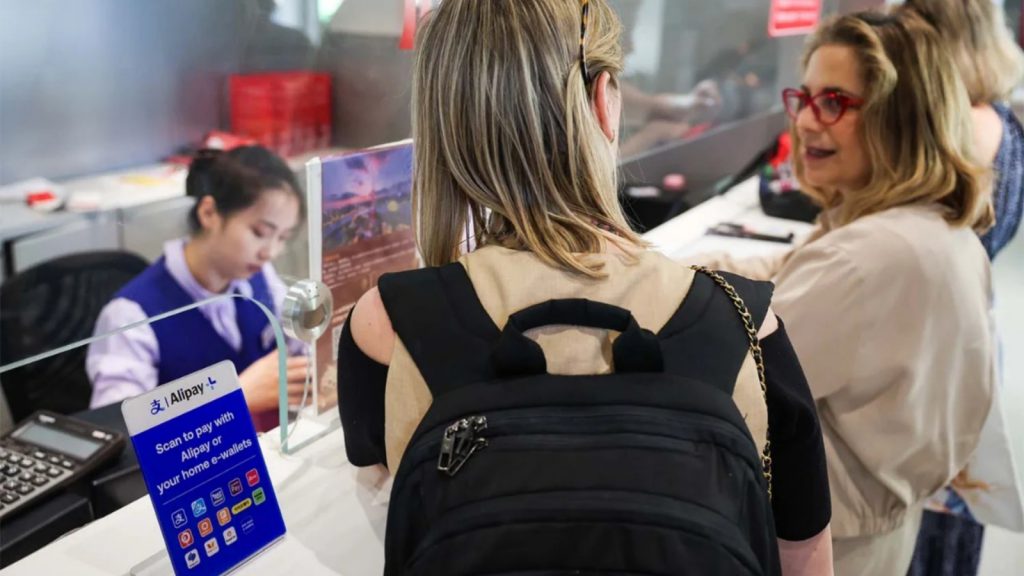
A tourist paying with Alipay at a bakery in China.
The Main Payment Methods in China
China's payment system is highly digital, with mobile payments becoming the most common way to pay for transportation, including tickets for China's high-speed rail system, dining, shopping, and daily services., dining, shopping, and daily services.
WeChat Pay
Integrated into the hugely popular social app WeChat, WeChat Pay is one of the most widely used payment systems in China. People use it not only for shopping, but also for:
- Restaurants
- Metro systems
- Taxis
- Attraction tickets
- Convenience stores
- Peer-to-peer transfers
For many locals, WeChat functions as a messaging app, digital wallet, and daily lifestyle platform all in one.
Alipay
Alipay is another dominant mobile payment platform in China. Originally created for online shopping, it has evolved into a full digital wallet used nationwide.
Alipay is commonly used for:
- Retail shopping
- Public transportation
- Restaurants
- Bike-sharing apps
- Hotel bookings
- Food delivery
Many travelers find Alipay slightly easier to navigate because it offers more English-language support and tourist-friendly features.
Bank Cards
Major hotels, international brands, and upscale shopping centers in large cities often accept:
- Visa
- Mastercard
- American Express
- UnionPay
However, smaller local businesses may not accept foreign cards directly, especially outside major tourist areas.
Cash
Cash is still accepted by law in China, but many businesses rarely handle it today. Some small vendors may not have enough change available, and cash payments can feel slower compared to QR scanning.
Carrying a small amount of Chinese yuan is still recommended for emergencies or backup situations.
How to Set Up WeChat Pay Step-by-Step
Originally created as a messaging app, WeChat has evolved into an all-in-one lifestyle platform.
Step 1: Download WeChat
Before arriving in China, download WeChat from the official website or app store and create an account using your mobile number
Step 2: Access the Wallet Feature
Inside the app, open:
“Me” → “Services” → “Wallet”
Depending on your region, menu names may vary slightly.
Step 3: Link an International Card
WeChat now supports many international cards, including Visa and Mastercard from numerous countries.
You may need to:
- Upload passport information
- Complete identity verification
- Add your card details
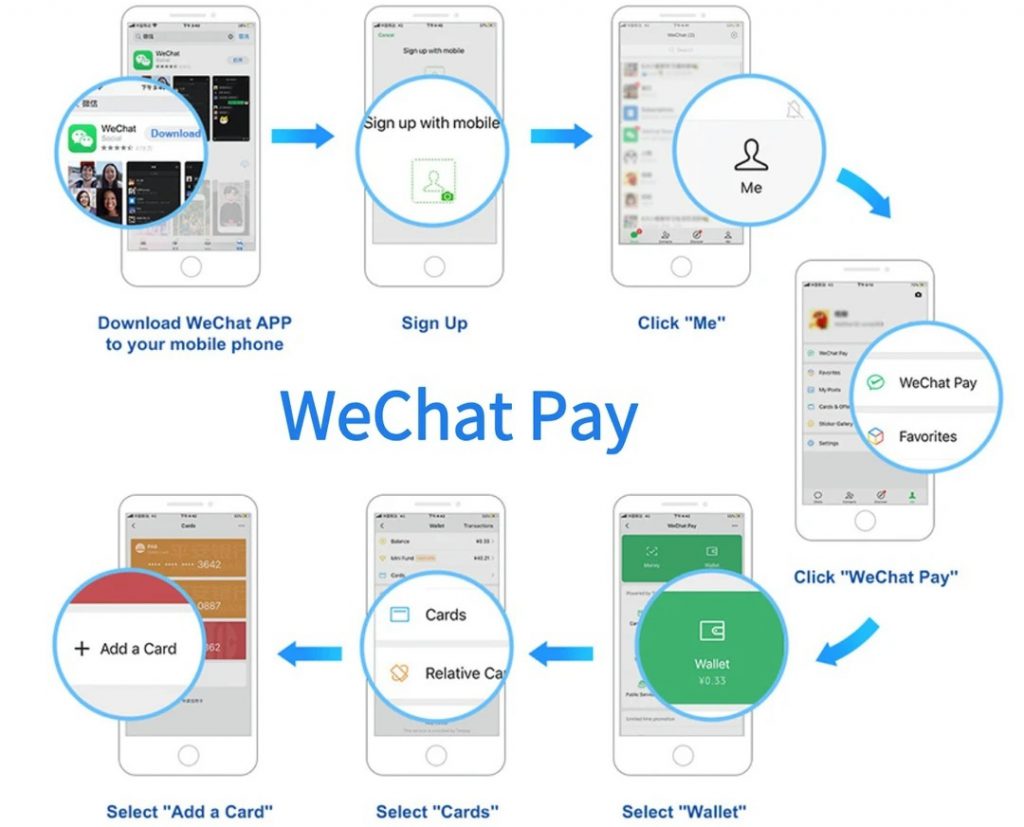
Detailed steps for setting up WeChat Pay.
Step 4: Start Paying with QR Codes
In China, payment usually works in one of two ways:
- Merchant Scans Your QR Code
You open your payment code, and the cashier scans it.
- You Scan the Merchant’s QR Code
You scan their code, enter the amount, and confirm payment.
After a few transactions, the process becomes surprisingly easy.
How to Use Alipay in China?
Many travelers consider Alipay the easiest payment app for first-time visitors.
Step 1: Download Alipay
You can download it before your trip from the official website or app store.
Step 2: Register with Your Passport and Phone Number
Foreign travelers can usually register using an overseas mobile number.
Step 3: Add an International Credit or Debit Card
Alipay supports various international payment cards. Once linked and verified, the app can usually be used for most everyday transactions in China.
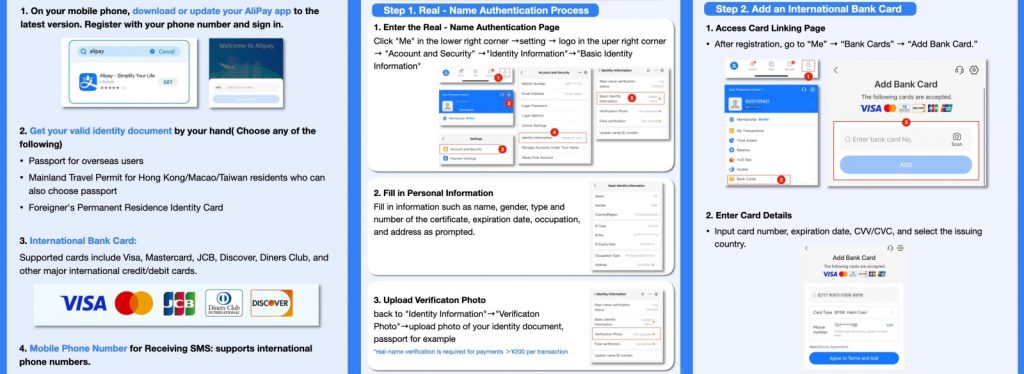
Step-by-step guide to setting up Alipay for international users.
WeChat Pay vs Alipay: Which Is Better for Travelers?
While both apps are widely accepted across China, there are a few differences that may matter to international travelers.
| Feature | WeChat Pay | Alipay |
|---|---|---|
| Popularity | Extremely common | Extremely common |
| Tourist Friendliness | Moderate | Strong |
| English Support | Limited in some areas | Generally better |
| Social Features | Messaging + payment | Payment-focused |
| Public Transport Integration | Good | Excellent |
If possible, setting up both apps provides the greatest flexibility during your trip.
Understanding QR Code Payments in China
QR codes are at the center of China's payment culture.
You will see QR codes almost everywhere:
- On restaurant tables
- At taxi windows
- In hotel lobbies
- At souvenir stalls
- On vending machines
- Even attached to bicycles
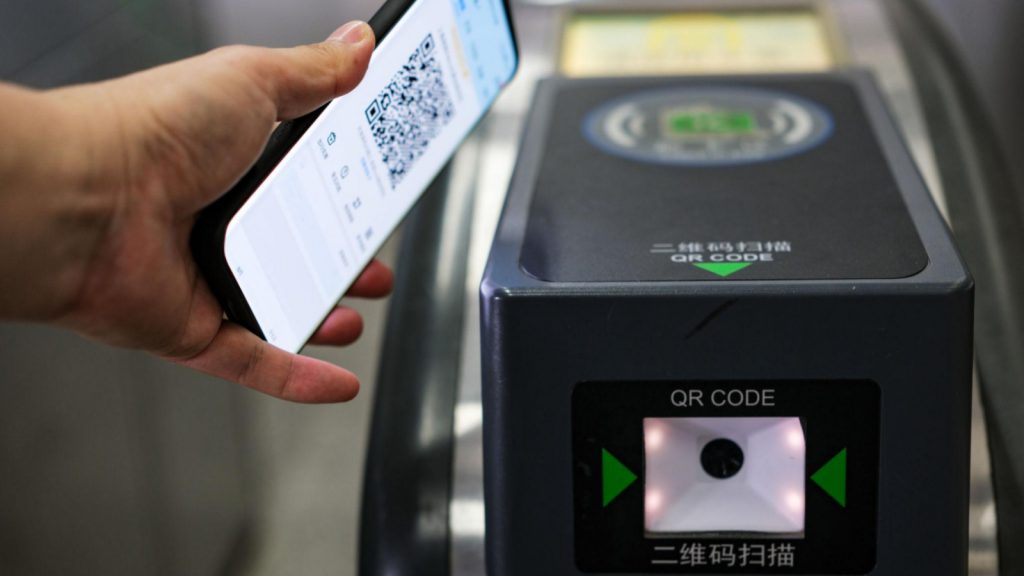
Scanning a QR code to pay for public transport in China.
In many places, QR codes are not only used for payment but also for:
- Ordering food
- Checking menus
- Joining Wi-Fi
- Booking attractions
For first-time visitors, this creates a very different travel experience compared to countries where cash and physical cards are still dominant.
Can Foreign Credit Cards Be Used in China?
International cards are accepted more widely than before, especially in major cities like Shanghai, Beijing, and Guangzhou.
However, travelers may still encounter situations where:
- Foreign cards fail unexpectedly
- Smaller shops only accept QR payments
- Machines cannot process overseas cards
- Staff are unfamiliar with international payment systems
For this reason, relying only on physical bank cards is not recommended.
Payment Tips for Travelers in China
Here are a few practical payment tips every first-time visitor should know before arriving.
Set Up Payment Apps Before Arrival
It is much easier to register accounts and troubleshoot issues before entering China.
Keep Internet Access Available
Mobile payment apps require internet access. Consider:
- A local SIM card
- eSIM services
- Portable Wi-Fi devices
Without internet, payment apps may not function properly.
Keep Your Phone Charged
In China, your smartphone effectively becomes your wallet. A portable power bank can be extremely useful.
Carry Backup Payment Methods
Even if mobile payment works smoothly most of the time, carrying:
- Some cash
- A physical bank card
- More than one payment app
can help avoid unexpected problems.
Is Mobile Payment Safe in China?
China’s mobile payment systems are generally considered very secure. Both WeChat Pay and Alipay include:
- Transaction verification
- Biometric login options
- Real-time notifications
- Fraud monitoring systems
Still, travelers should avoid:
- Scanning suspicious QR codes
- Using public Wi-Fi for sensitive transactions
- Sharing verification codes with strangers
Basic digital safety practices are always important.
Understanding payment in China is now an essential part of travel planning. While cash and international cards still have limited uses, mobile payment platforms like WeChat and Alipay have become the easiest and most convenient ways to pay across the country.
The system may feel unfamiliar at first, but most travelers adapt quickly after a day or two in China. Once you get used to scanning QR codes for coffee, metro rides, and even street snacks, you may find China's payment experience surprisingly efficient and convenient.
By setting up your payment apps before arrival and carrying a few backup options, you can enjoy a smoother and more confident travel experience throughout China.