
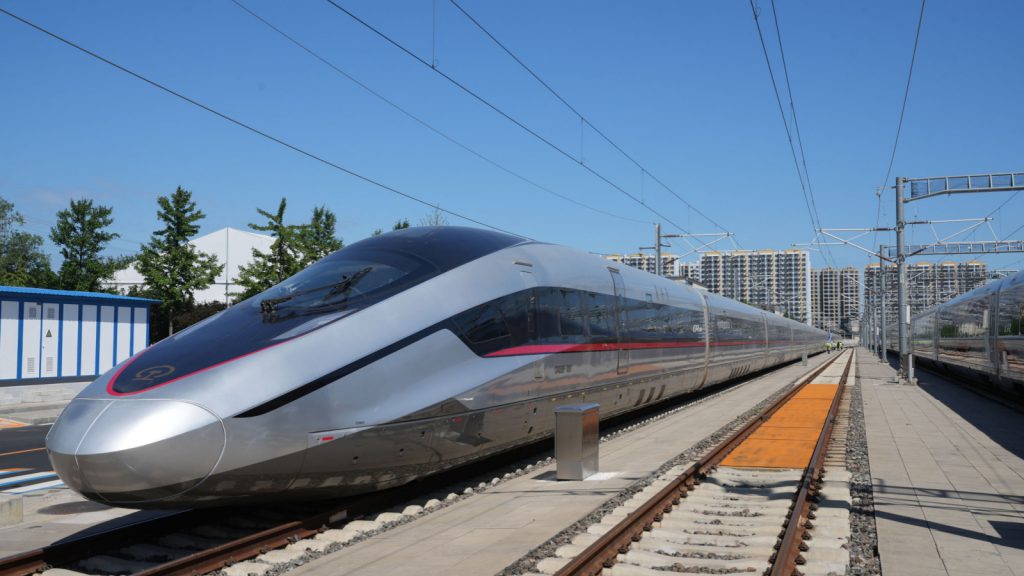
China’s High-Speed Rail (HSR) system is one of the most advanced and efficient transportation networks in the world. For international travelers, it is often the fastest, safest, and most convenient way to travel between major cities like Beijing, Shanghai, Xi’an, Chengdu, Guangzhou, and beyond.
But for first-time visitors, China’s train system can also feel confusing.
Can foreigners use passports instead of Chinese ID?
How early should you arrive at the station?
How do you collect tickets?
What happens if you miss your train?
Is train transfer difficult with luggage?
These are the real questions travelers ask—not just how fast the train is.
This guide explains exactly how China’s High-Speed Rail works for foreigners.
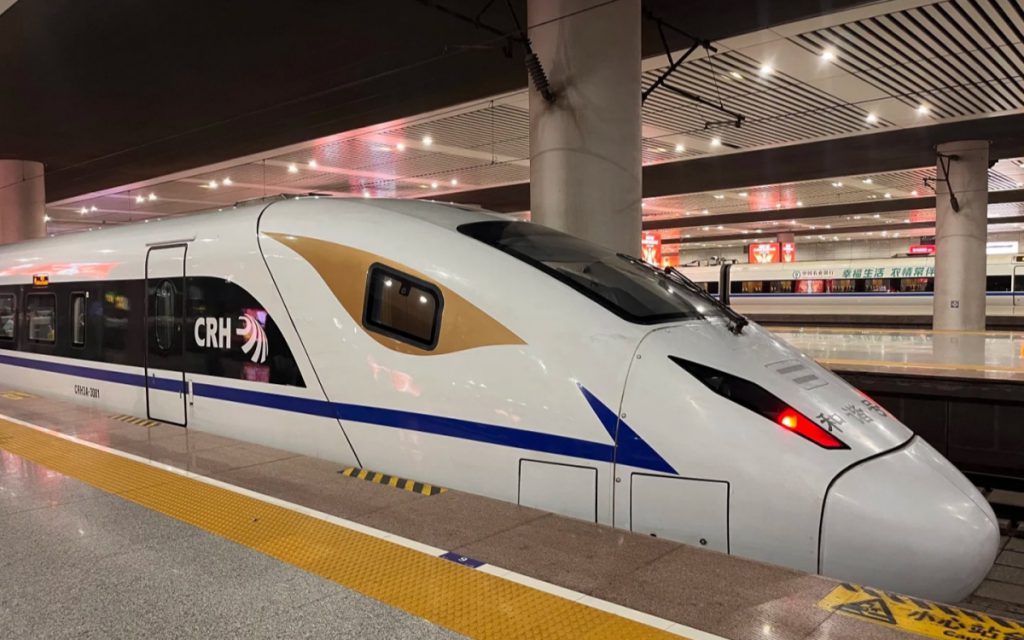
China High-Speed Rail
1. Can Foreigners Take High-Speed Rail in China?
Yes—absolutely.
Foreign passport holders can book and travel on China’s HSR system without any problem.
You do not need a Chinese ID card.
Your passport becomes your main travel document for:
- Train ticket booking
- Security checks
- Station entry
- Boarding verification
Your passport is essential. Keep it with you at all times.
A passport copy is not enough.
2. How to Book China Train Tickets
There are several ways to book:
Option 1: Through a China Travel Agency or DMC
This is the easiest and safest option for international travelers, especially for multi-city itineraries.
A local operator can help with:
- Fast ticket release timing
- Passport registration
- Seat selection
- Group bookings
- Backup planning if trains sell out
This is especially important during holidays and peak seasons.
Option 2: Official Railway Platforms
Some travelers use:
- 12306 official railway system
- Trip.com international platform
However, self-booking can be difficult because:
- Ticket inventory opens only 15 days before departure
- Popular routes sell out within minutes
- Identity verification can fail
- Payment systems may reject foreign cards
For important routes, relying only on self-booking is risky.
3. How Early Should You Arrive at the Station?
This is where many foreigners make mistakes.
China train stations operate much more like airports than European rail stations.
You must pass through:
- Passport verification
- Security screening
- Large station navigation
- Boarding gate checks
At major stations, walking distances can be surprisingly long.
Recommended arrival time:
45–60 minutes before departure
For:
- Beijing
- Shanghai
- Xi’an
- Guangzhou
- Chengdu
- Holiday travel periods
During Golden Week or Chinese New Year:
Even earlier is safer.
Arriving “10 minutes before departure” is a common mistake.
4. Do You Need a Paper Ticket?
Usually, no.
In many cases, your passport works as your boarding credential.
This is called:
Passport-based ticketing
However:
- Some stations still require manual verification
- Some routes may involve extra checks
- Older travelers often feel safer with printed confirmation
Best practice:
Always keep:
- Passport
- Booking confirmation
- Train number
- Departure station name in Chinese
Do not rely only on screenshots.
5. Security Checks Are Serious
Security screening is mandatory.
Expect:
- Luggage X-ray
- Personal bag inspection
- Liquid restrictions in some cases
- Passport inspection
This is normal.
China treats rail security very seriously.
Large luggage is allowed, but packing efficiently helps.
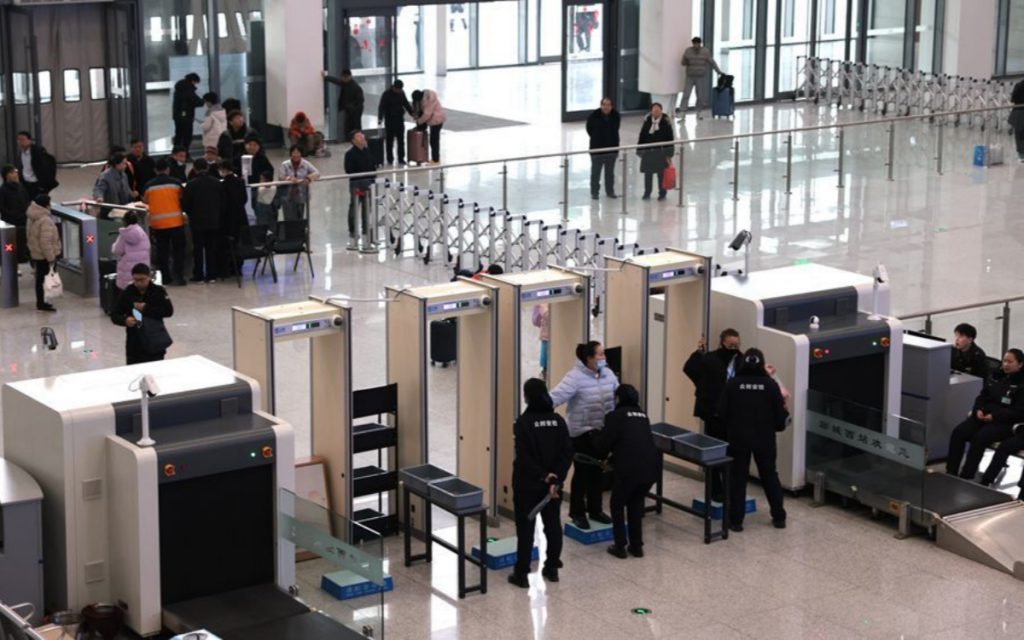
Security Check
6. Is Train Transfer Difficult?
It depends.
For direct routes:
Very easy.
For transfers:
It can be stressful without planning.
Challenges include:
- Different stations in the same city
- Long walking distances inside major hubs
- Platform changes
- Tight connection times
- Luggage handling
Example:
Shanghai Hongqiao ≠ Shanghai Railway Station
Many travelers confuse these.
They are different stations.
This causes missed trains.
Safe recommendation:
Avoid connections shorter than:
90 minutes
Especially for foreigners unfamiliar with the system.
7. First Class vs Second Class: Which Should You Choose?
Second Class
Best for:
- Standard travel
- Budget-conscious travelers
- Short-to-medium routes
Comfort is already very good.
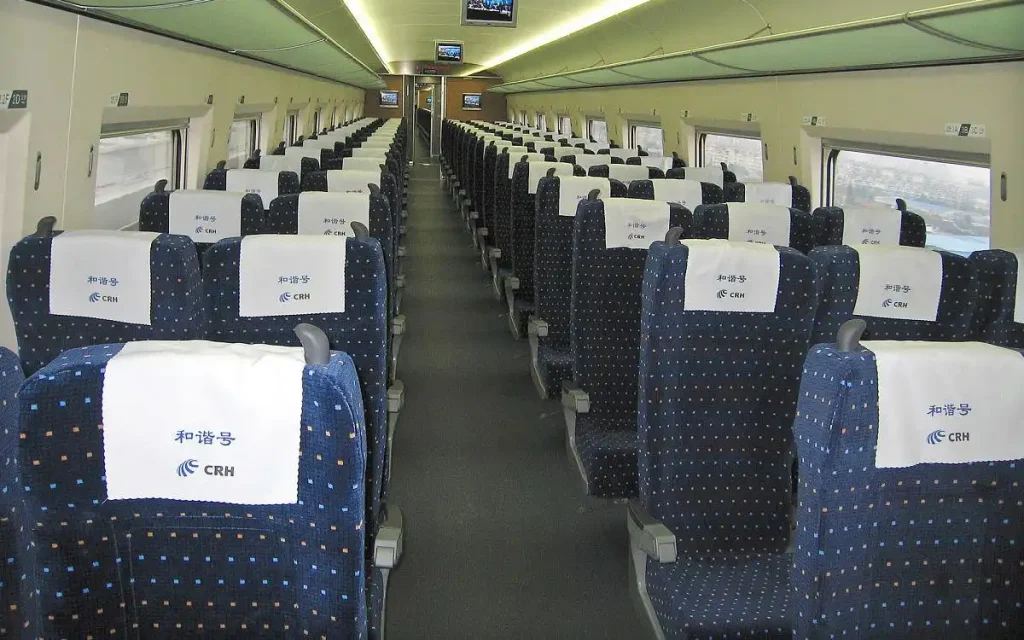
Second class
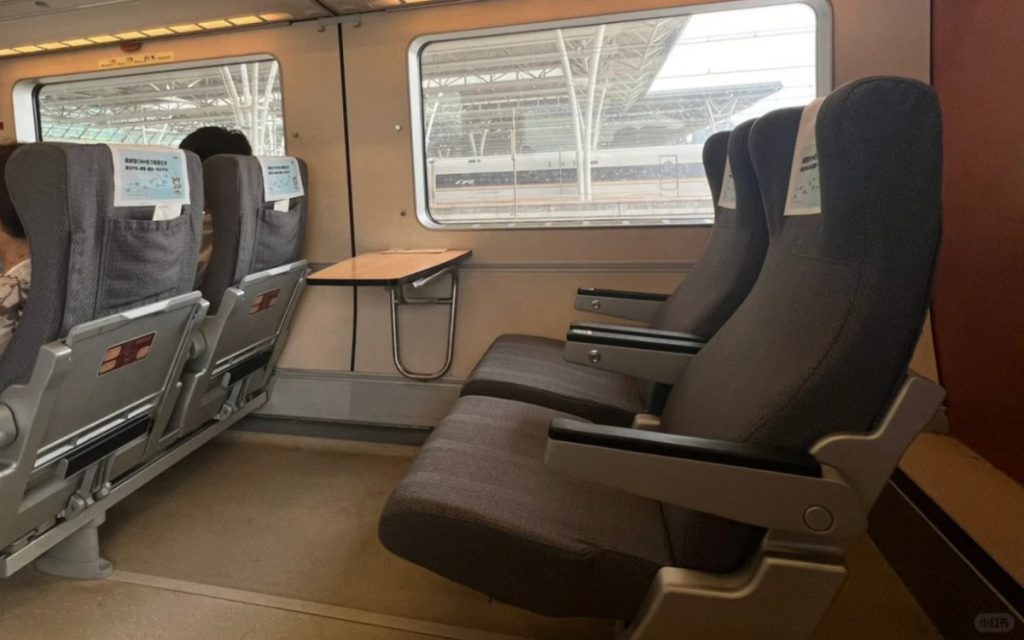
First Class
Better for:
- Seniors
- Families
- Business travelers
- Longer journeys
Seats are wider and quieter.
First class
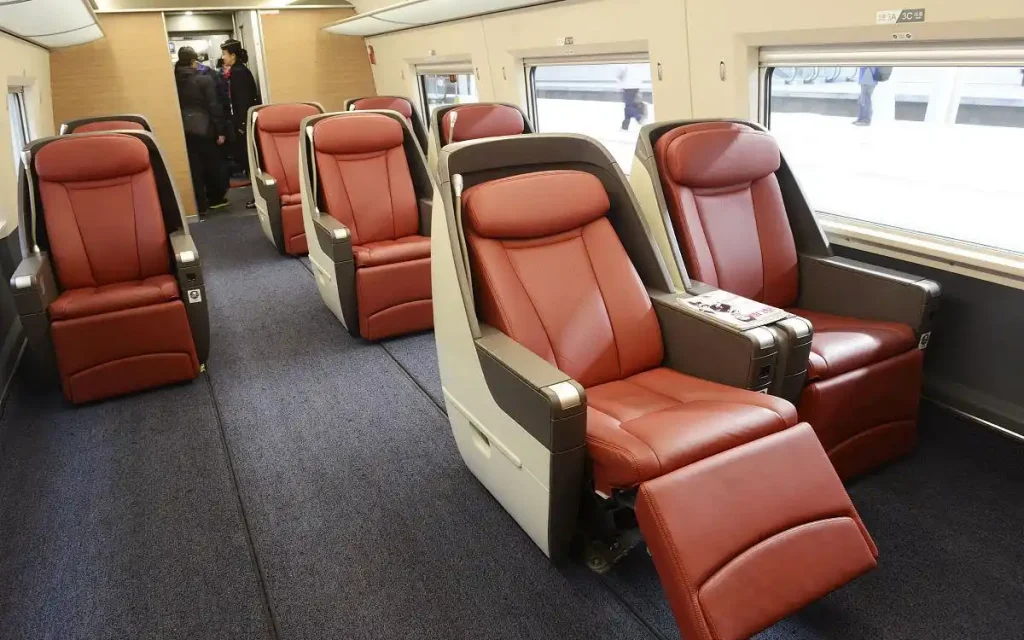
Business Class
Luxury option with significantly higher prices.
Useful for:
- VIP travel
- Premium FIT clients
- High-end private tours
Business class
8. What Happens If You Miss Your Train?
It depends on the ticket type and timing.
Sometimes:
- Ticket changes are possible
- Same-day re-booking may be allowed
Sometimes:
- You lose the ticket completely
Language barriers make this harder.
This is why professional assistance matters.
Especially for:
- Tight itineraries
- International connections
- Tibet / permit-based travel routes
One missed train can affect the entire journey.
9. Holiday Travel Can Change Everything
During:
- National Day Golden Week
- Chinese New Year
- Summer holiday peaks
China’s domestic tourism volume becomes enormous.
Effects include:
- Tickets selling out instantly
- Huge station crowds
- Longer security queues
- Higher stress for travelers
During these periods:
Advance strategy is not optional.
It is essential.
10. Final Advice: HSR Is Excellent—But It Requires Preparation
China’s High-Speed Rail is often better than flying for domestic travel.
It is:
- Faster city-center to city-center
- More reliable
- More comfortable
- Better for multi-city itineraries
But success depends on preparation.
Not speed.
Not technology.
Preparation.
For foreigners, the biggest problem is rarely the train itself.
It is understanding how the system actually works.
And once you understand it, China becomes dramatically easier to travel.
Need Help with Multi-City Train Planning in China?
For travel agents, FIT travelers, and private tour clients, managing HSR across multiple cities requires more than ticket booking.
It requires:
- Route planning
- Timing control
- Backup solutions
- Local transfer coordination
- Ground support when things change
That is where an experienced China DMC makes the difference.