
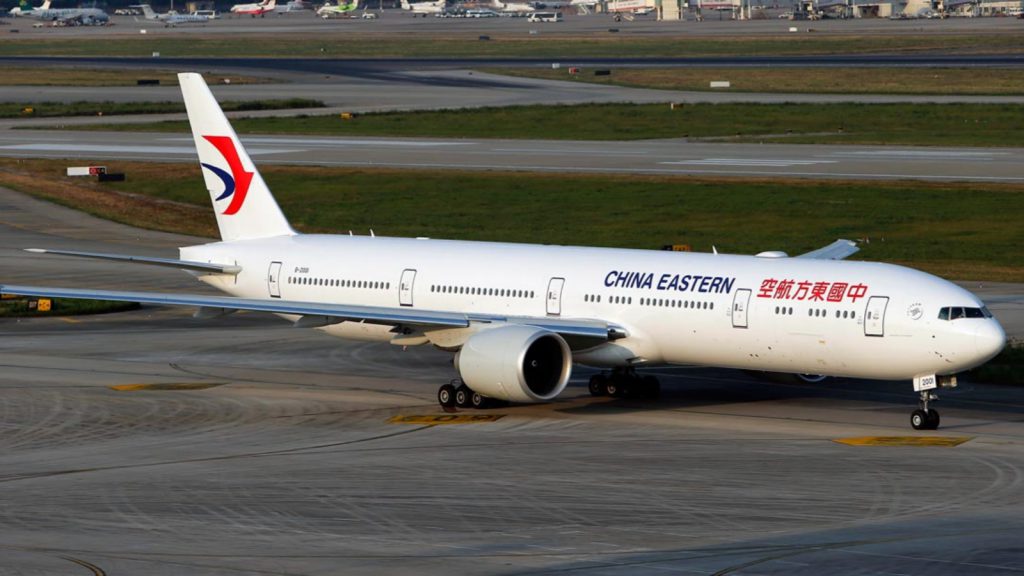
China's internal flight rules are based on strict civil aviation safety and security standards that regulate passenger behavior, baggage handling, and in-flight procedures.
For international travelers, understanding these regulations before arriving at the airport is important, especially because security checks in China are generally strict and consistently enforced. Many common travel items accepted in other countries may still require additional inspection or have different restrictions in China.
This guide explains what is allowed, what is restricted, and what is strictly prohibited when taking internal flights in China.
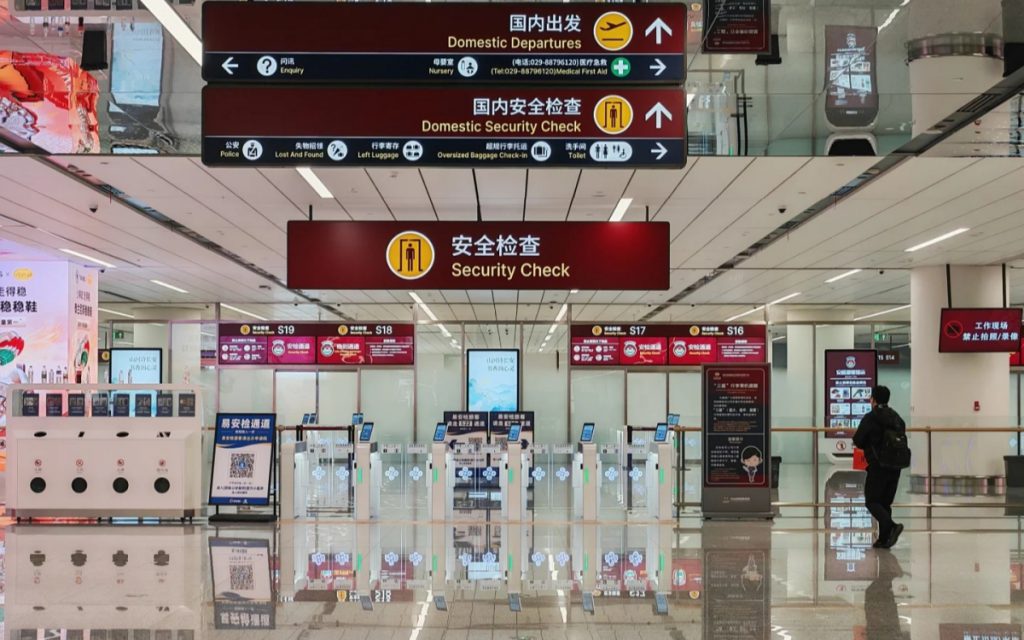
Xi'an Xianyang International Airport
Prohibited items on internal flights in China
The following items are strictly forbidden in both carry-on and checked baggage under Civil Aviation Administration of China regulations:
1. Weapons and controlled tools
- Firearms and replicas
- Controlled knives (daggers, spring knives, self-locking knives)
- Electric shock devices, batons, crossbows
Even decorative or collectible replicas may be confiscated if considered security risks.
2. Explosives and flammable items
- Fireworks, explosives, ammunition
- All types of lighters and matches (fully prohibited)
- Firecracker-related materials
These items are considered serious aviation safety threats.
3. Highly flammable substances
- Alcohol above 70% concentration
- Fuel (gasoline, diesel, kerosene)
- Self-heating meals and similar products
Self-heating food products are increasingly restricted because the heating components may activate accidentally during transport.
4. Toxic and corrosive substances
- Poisonous chemicals (e.g., cyanide, arsenic)
- Strong acids and alkalis
- Radioactive or infectious materials
5. Lighters and matches
China’s aviation rules completely prohibit:
- Disposable lighters
- Refillable lighters
- Electronic lighters
- Matches
Passengers should discard these items before entering airport security areas.
6. Other prohibited items
- Items carried for unknown third parties
- Strongly magnetized items
- Items with strong irritating odors
Certain foods with strong odors may be restricted depending on airport and airline policies.
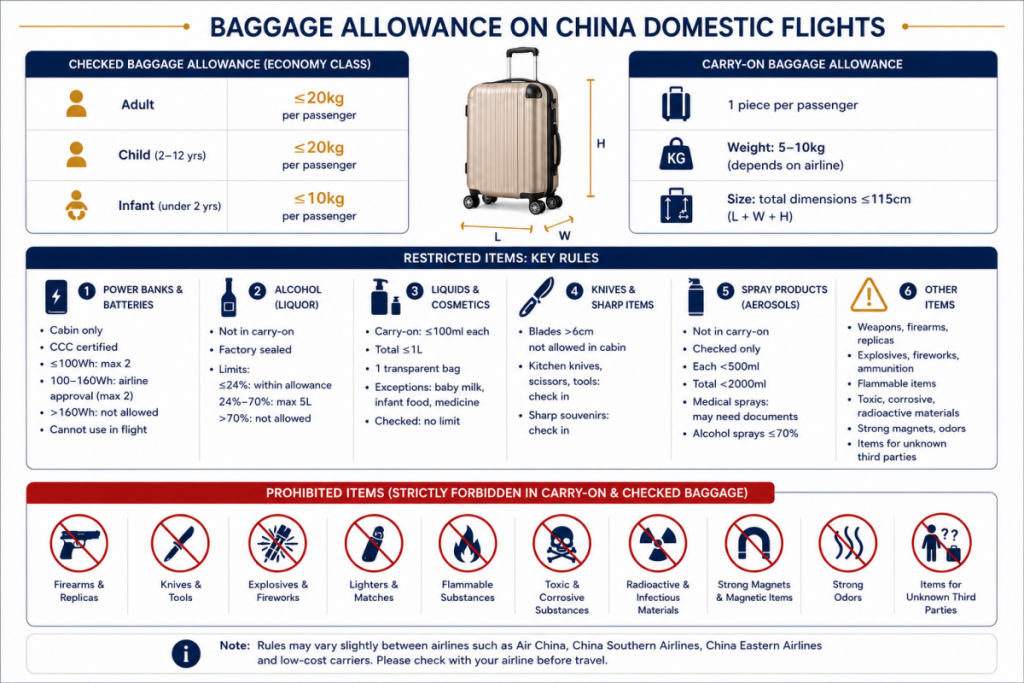
Baggage allowance on China domestic flights
Restricted items: detailed regulations
Certain items are allowed only under strict conditions and are among the most frequently inspected at airport security checkpoints in China.
1. Power banks and lithium batteries (CCC certification required)
This is one of the most strictly controlled categories in airport security.
- Must be carried in cabin only (not allowed in checked baggage)
- Must display clear CCC(China Compulsory Certification)
- Damaged or swollen batteries are prohibited
- Security officers may reject batteries with unclear labeling
Rated energy limits:
- ≤100Wh: allowed (recommended max 2 units)
- 100–160Wh: airline approval required (max 2 units)
- >160Wh: not allowed
China introduced updated battery safety standards in 2026, increasing inspections on uncertified or poorly labeled devices.
Passengers should also note that power banks cannot be used during flights for charging devices.
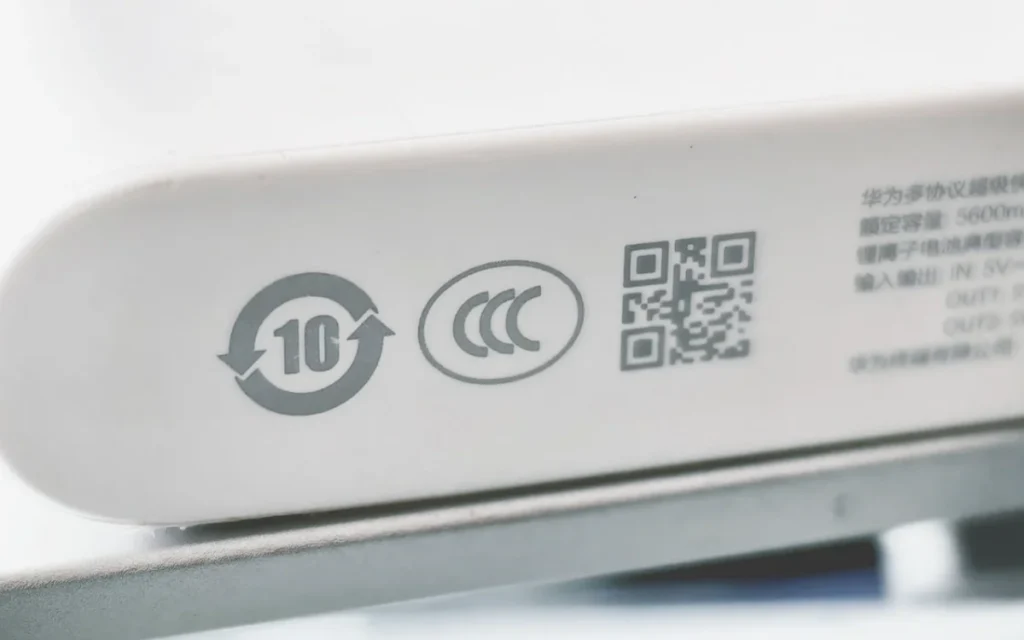
Pover bank with China Compulsory Certification
2. Alcohol (liquor and beverages)
Alcohol transportation rules depend on alcohol percentage and packaging condition.
- Alcohol is not permitted in carry-on baggage
- Bottles must remain factory sealed
- Homemade alcohol is prohibited
- Broken or leaking bottles may be refused during check-in
Alcohol limits:
- ≤24% alcohol: generally permitted within baggage allowance
- 24%–70% alcohol: maximum 5 liters per passenger
- >70% alcohol: prohibited
Travelers purchasing local Chinese liquor should verify alcohol percentage before airport arrival.
3. Liquids and cosmetics
Carry-on liquid restrictions are strictly enforced at Chinese airports.
Carry-on restrictions:
- Each container must not exceed 100ml (based on labeled capacity)
- Total liquid quantity must not exceed 1 liter
- Must be placed in a transparent bag and checked separately
Exceptions:
- Baby milk and infant food
- Essential prescription liquid medication
- Medical liquids approved during inspection
Checked baggage:
- No major restrictions for most cosmetics and toiletries
- Fragile containers should be protected carefully due to baggage handling conditions
4. Knives and sharp objects
- Blades longer than 6cm are not allowed in cabin baggage
- Kitchen knives, scissors, and tools should be checked in
- Sharp souvenirs purchased during travel should also be packed in checked luggage
5. Spray products (aerosols)
Different spray products are regulated differently depending on their contents.
Personal care sprays such as deodorants, hairsprays, shaving foam, and sunscreen sprays:
- Not allowed in carry-on baggage
- Allowed in checked baggage
- Each container must be under 500ml
- Total combined volume must remain below 2000ml
Medical aerosol sprays:
- Generally permitted
- May require medical documentation or prescriptions
Alcohol-based disinfectant sprays:
- Not allowed in carry-on baggage
- Allowed in checked baggage only if alcohol content does not exceed 70%
Damaged or leaking aerosol containers are prohibited regardless of content.
Baggage allowance rules (economy class reference)
Baggage policies are generally similar among major Chinese airlines such as Air China, China Southern Airlines, and China Eastern Airlines, although low-cost airlines may apply stricter limits.
Carry-on baggage
- Usually 1 piece per passenger
- Weight: 5–10kg depending on airline
- Size: total dimensions ≤115cm
Checked baggage
- Economy flights: ~20kg per passenger
- Excess baggage fees apply for overweight luggage
Rules may vary slightly between airlines such as China Southern, China Eastern, and Air China, as well as low-cost carriers.
Security inspection standards in China airports
Airport security procedures in China are detailed and can take time during busy periods.
Arrival time recommendation
- Arrive at least 2 hours early
- Add extra time during Chinese public holidays and peak travel seasons
Security screening process
Passengers should prepare for:
- Passport and boarding pass checks
- Separate screening of electronics
- Removal of outerwear and metal items
- Separate liquid inspection
Additional checks are common for batteries, cameras, drones, and electronic devices.
In-flight safety and passenger regulations
China’s aviation authorities enforce onboard safety rules strictly.
- Smoking (including e-cigarettes) is strictly prohibited throughout the flight
- Phones must remain in flight mode
- Power banks cannot be used during the flight
- Emergency exits must never be touched without crew instruction
- Passengers must follow assigned seating arrangements
Violations may lead to fines or legal consequences.
Important safety notice: fraud prevention
Chinese authorities regularly warn travelers about airport-related scams.
Airlines and airport staff will never:
- Ask for bank account information
- Request verification codes
- Ask passengers to transfer money for refunds or rebooking
- Require installation of unknown applications
Travelers should verify all flight updates through official airline channels only.
China’s internal flight rules are strict but clearly structured. Most issues faced by international travelers come from misunderstanding restrictions on batteries, liquids, and prohibited items.
By following these rules, passengers can pass security smoothly and enjoy a safe and efficient travel experience on internal flights within China.