
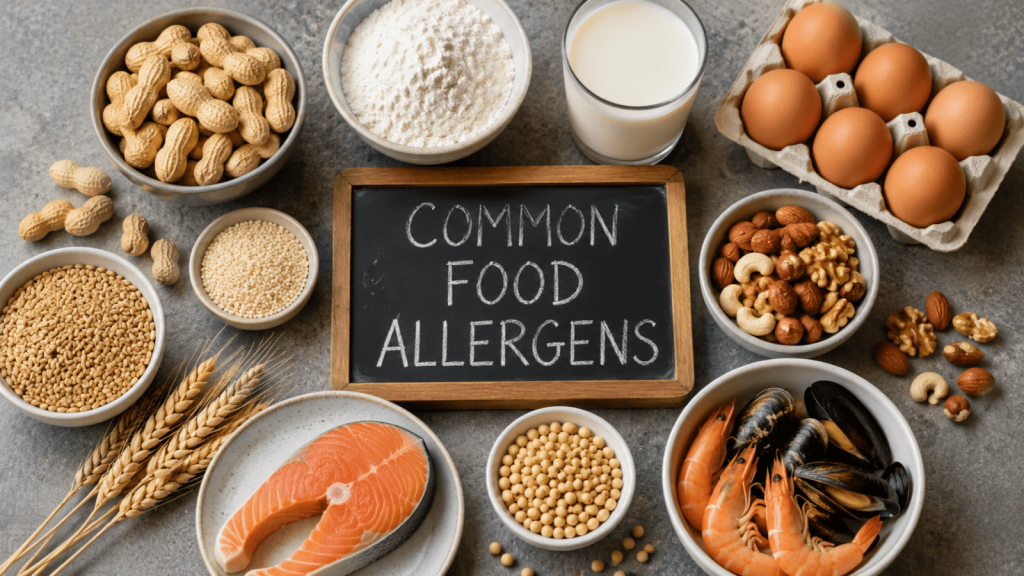
Travelling to China with a food allergy, gluten-related condition or lactose intolerance requires clear communication. A restaurant may understand that you do not want a particular ingredient, but staff also need to know whether it can appear in cooking oil, sauces, seasoning, soup stock or shared cookware.
We prepared five Chinese-English food information cards covering peanut allergy, gluten avoidance, shellfish and seafood allergy, chilli allergy, and lactose intolerance.
You can download the relevant card before travelling, save it to your phone or take a screenshot. A printed copy is also useful when your phone has no signal or battery.
Each card contains a detailed Chinese explanation, an English translation, ingredients requiring attention and space for a Chinese-speaking emergency contact in China.
Important medical note These cards are communication tools. They do not replace advice from your doctor, prescribed medication or a personal medical emergency plan. |
Why Should You Carry a Chinese Food Allergy Card in China?
Explaining an allergy requires more than translating the name of one ingredient. For example, a visitor with a peanut allergy may also need to avoid peanut oil, blended cooking oil, sauces containing peanuts and food prepared with shared equipment. Someone avoiding gluten may need restaurant staff to check flour, starch, soy sauce, marinades and seasoning.
A bilingual card allows restaurant staff, hotel employees, guides and drivers to read the complete request instead of relying on a short verbal translation.
How Can Travellers Download and Use the Cards?
Open the relevant image in full size and save it to your phone. You may also take a screenshot or print the card before departure.
- Keep the original image in your phone’s photo gallery.
- Print at least one copy and carry it with your passport or medication.
- Write the name and telephone number of your emergency contact in China.
- Show the card before ordering, not after the food has been prepared.
- Ask the staff to show the Chinese section to the person preparing the meal.
- Keep the card visible until the ingredients and cooking method have been checked.
A translation card helps staff understand the request, but it cannot guarantee that a kitchen is completely free from an allergen or cross-contact risk.
Peanut Allergy Translation Card
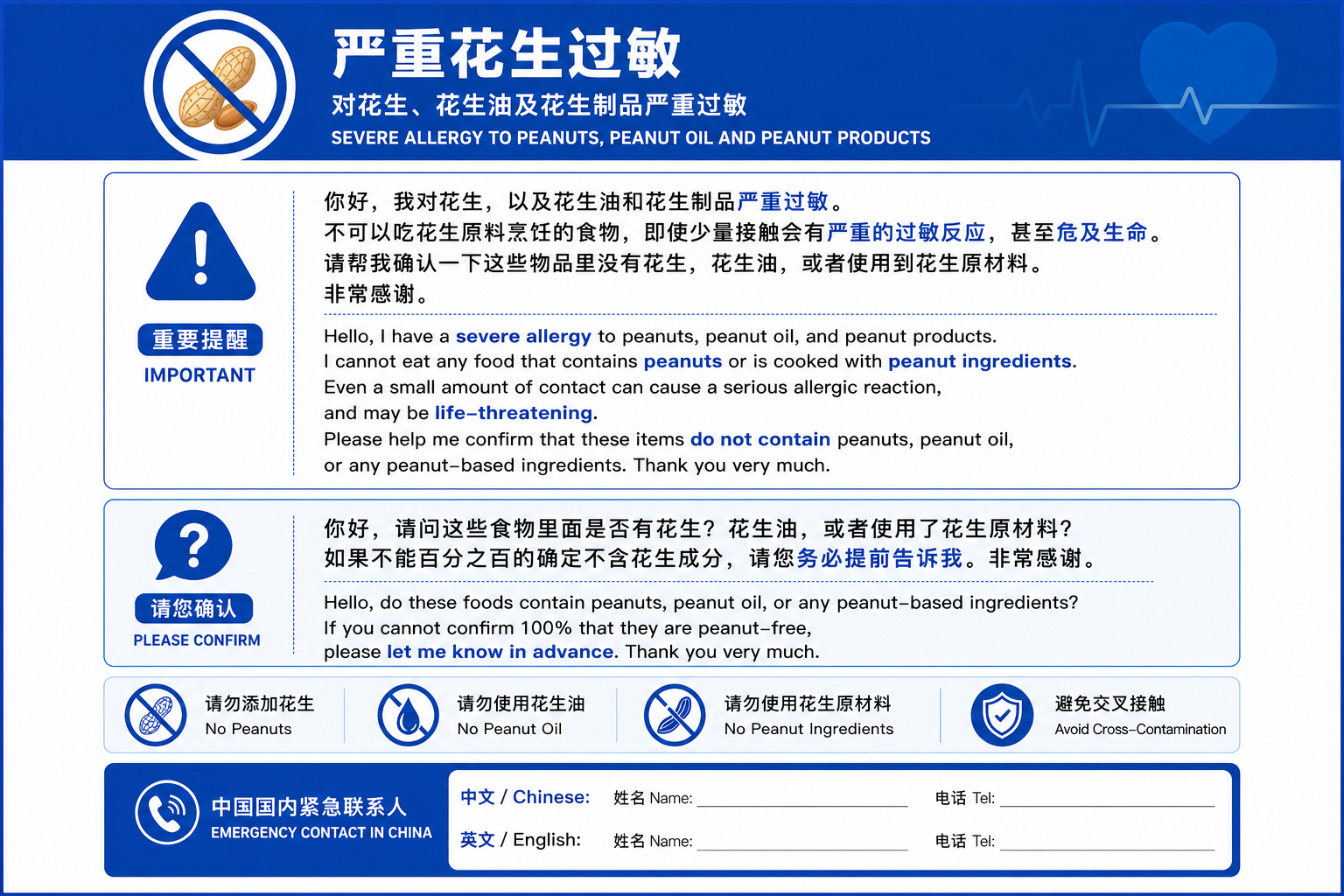
This card is intended for travellers who must avoid peanuts, peanut oil, peanut paste or peanut butter, peanut-based sauces and seasoning, food prepared with peanut ingredients, and possible cross-contact during cooking.
The Chinese message explains that even a small amount may cause a serious reaction. It asks the restaurant to confirm the ingredients, cooking oil and preparation method before serving the food.
Gluten Avoidance Translation Card
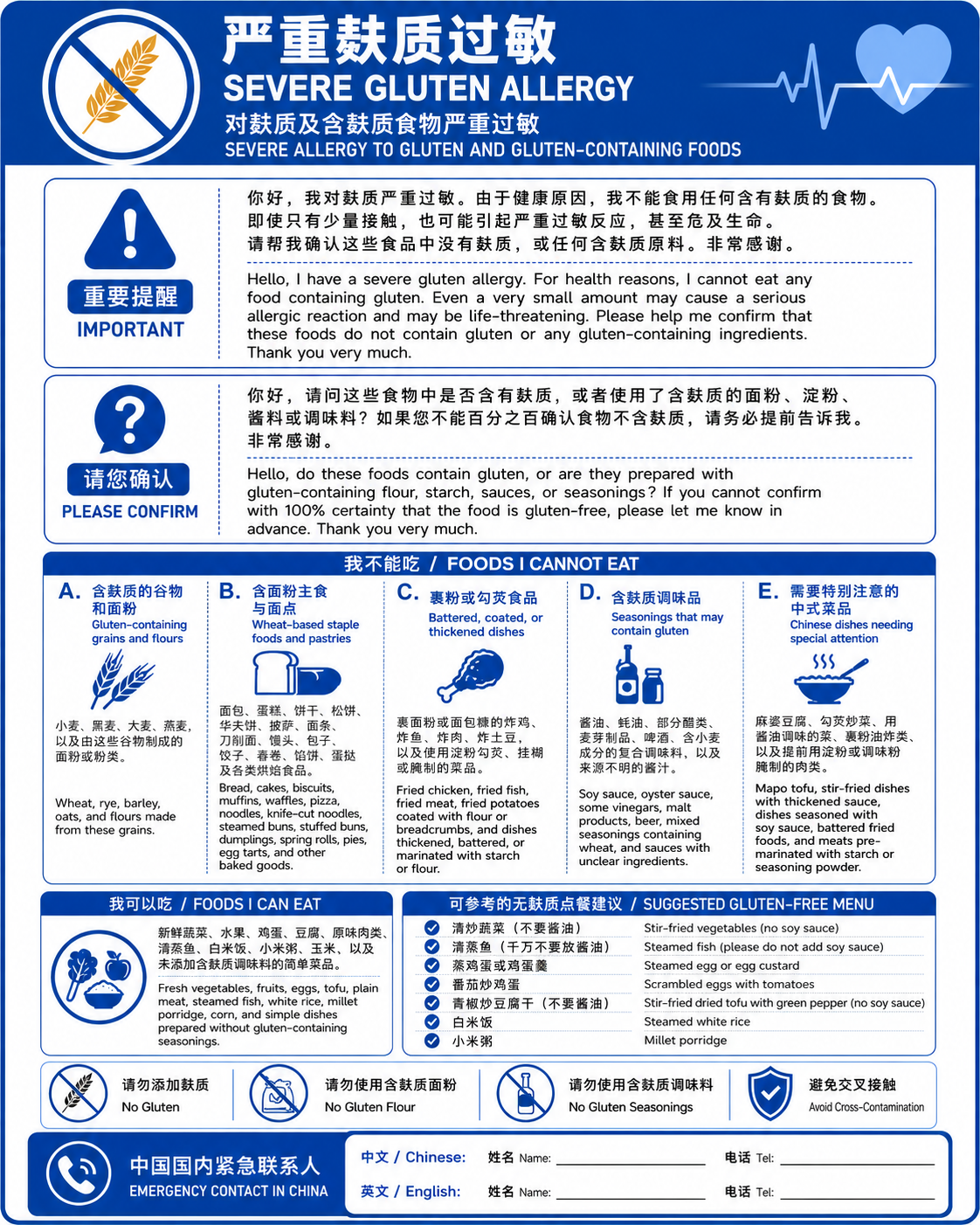
The detailed card identifies several areas requiring attention:
- Wheat, barley, rye and foods made from their flour
- Bread, cakes, pastries, noodles and dumpling wrappers
- Battered, breaded or flour-thickened dishes
- Soy sauce, oyster sauce and unidentified seasoning
- Meat marinated with flour or starch
- Shared cooking equipment and cross-contact
It also gives examples of simpler meal requests, including plain rice, millet porridge, steamed egg, vegetables and dishes prepared without soy sauce or gluten-containing seasoning.
Visitors should make sure the wording on the card matches their actual diagnosis, whether that is celiac disease, wheat allergy or another medically advised gluten restriction.
Shellfish and Seafood Allergy Card
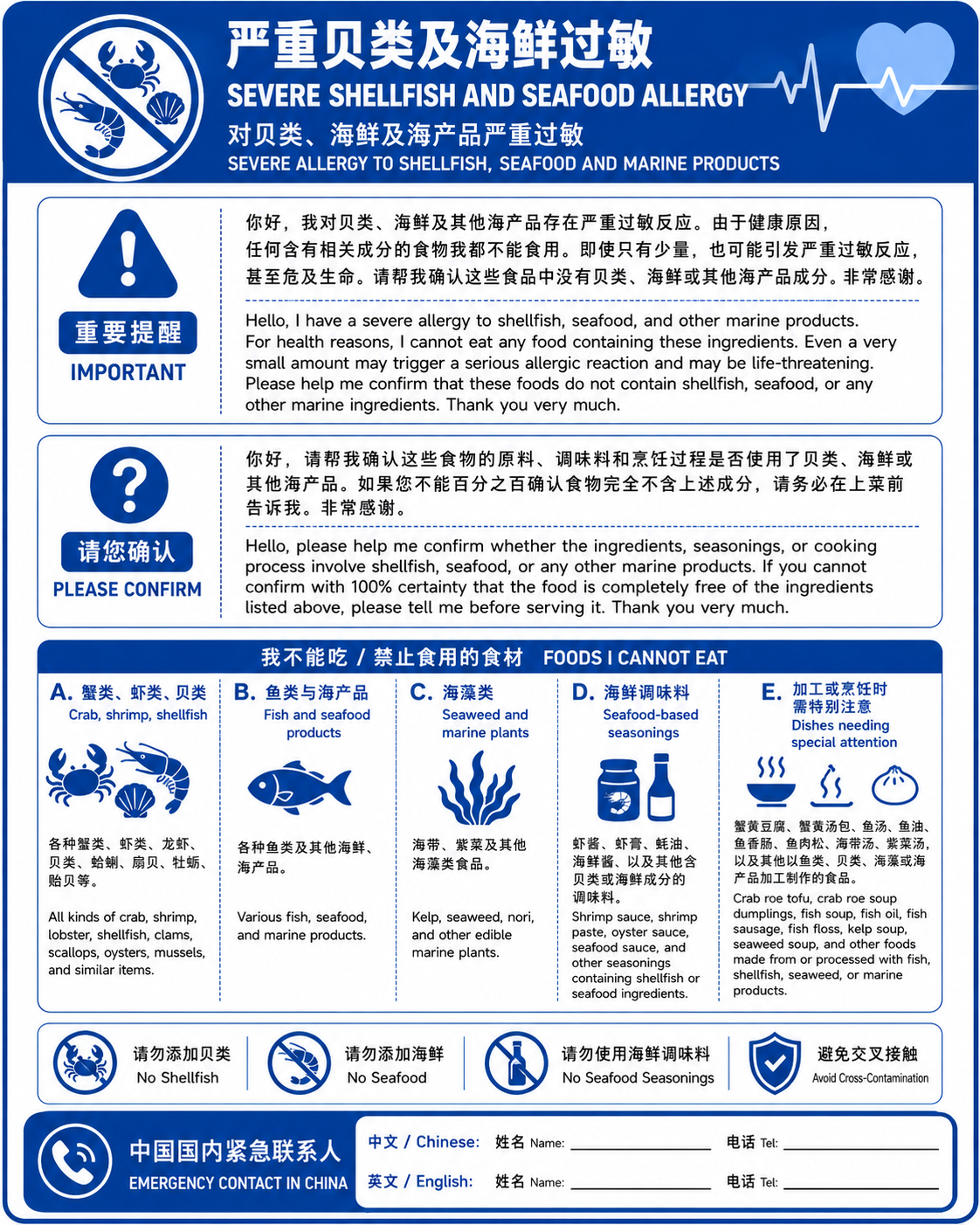
This card asks restaurant staff to check for:
- Crab, shrimp, lobster and other crustaceans
- Clams, oysters, scallops, mussels and other shellfish
- Fish and fish products
- Seaweed and marine ingredients
- Shrimp paste, oyster sauce and seafood seasoning
- Fish stock, seafood soup and processed seafood products
- Cross-contact from cookware, frying oil or utensils
Use the complete version only when all the listed foods match the traveller’s restrictions. An allergy to finned fish is not automatically the same as an allergy to shellfish, and some people need to avoid one category but not the other.
Chilli Allergy Translation Card
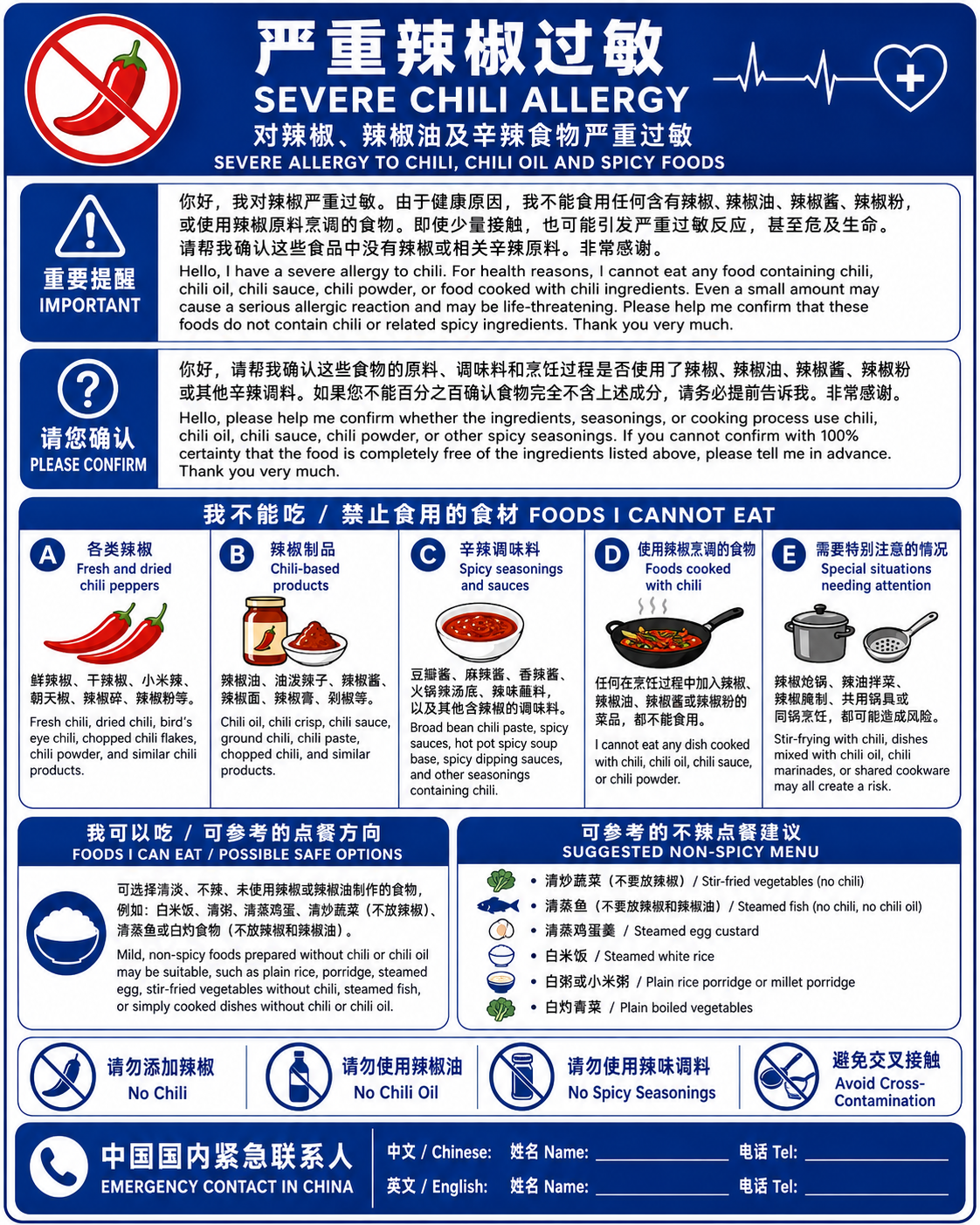
This card is more specific than simply saying “not spicy.” It asks the chef not to use:
- Fresh or dried chilli
- Chilli powder or chilli flakes
- Chilli oil
- Chilli sauce or chilli paste
- Spicy bean paste and hotpot seasoning
- Spicy marinades
- Shared oil or cooking utensils containing chilli
The wording states that this is a medical requirement rather than a taste preference. Restaurant staff are asked to confirm the ingredients, seasoning and cooking process before serving the dish.
Lactose Intolerance Card
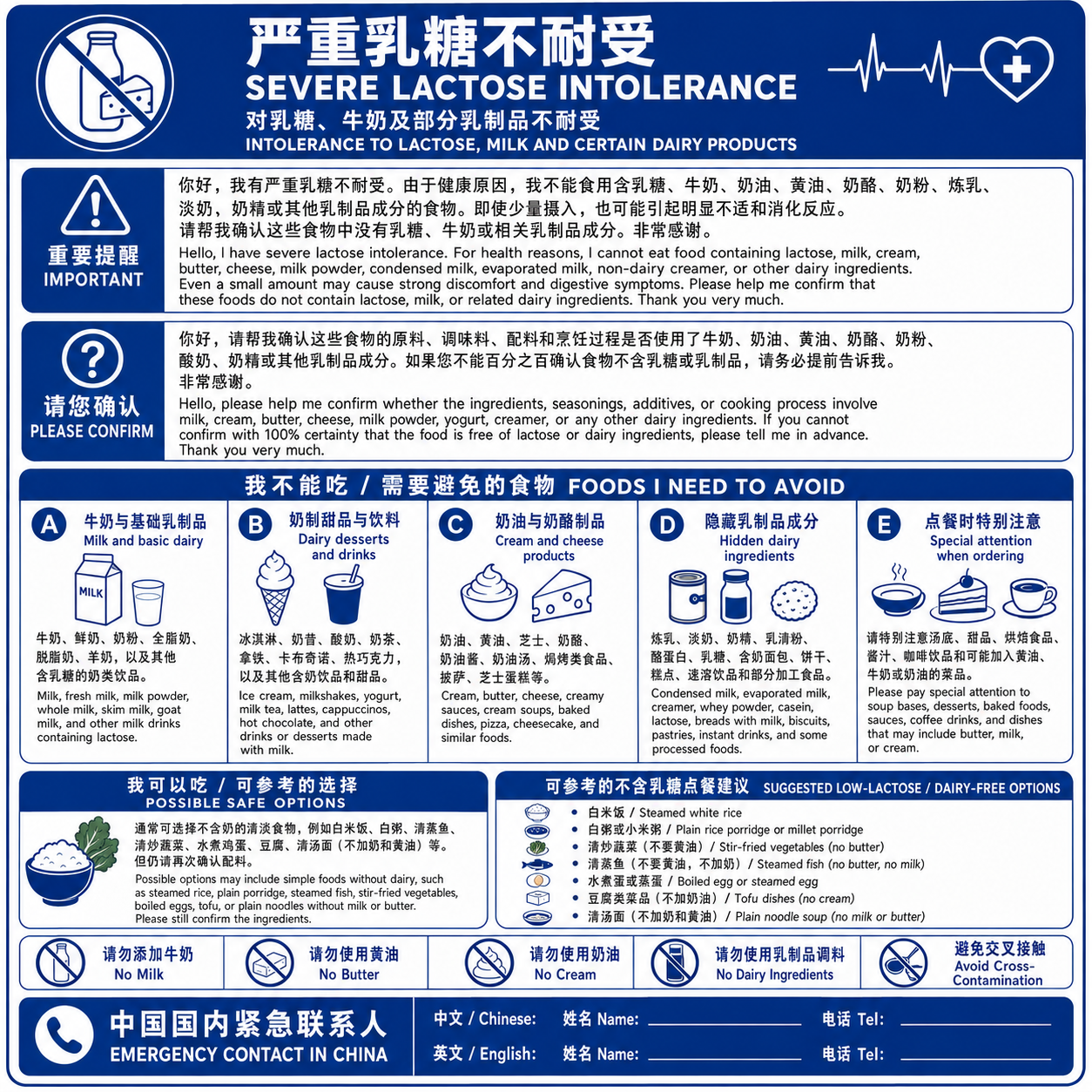
The lactose intolerance card asks staff to check whether a dish contains:
- Milk, cream and butter
- Cheese and milk powder
- Condensed or evaporated milk
- Yogurt and creamer
- Whey or other dairy ingredients
- Dairy ingredients in desserts, drinks, soups and baked foods
Lactose intolerance is a digestive condition and is different from a milk allergy, which is an immune response to milk proteins. Someone with a diagnosed milk allergy should use a separate milk and dairy allergy card rather than relying only on a lactose intolerance card.
Extra Support: Medical Help Card for Emergencies in China
To help international travellers feel more at ease during their visit to China, we have also prepared a simple bilingual medical help card. If someone needs urgent medical assistance, they can download this image in advance, save it to their phone, or take a screenshot and show it directly to people nearby.
The card clearly asks for help calling 120, which is the ambulance number in mainland China. It also includes space for a Chinese-speaking emergency contact in China, making it more practical when a visitor cannot explain the situation quickly or clearly.
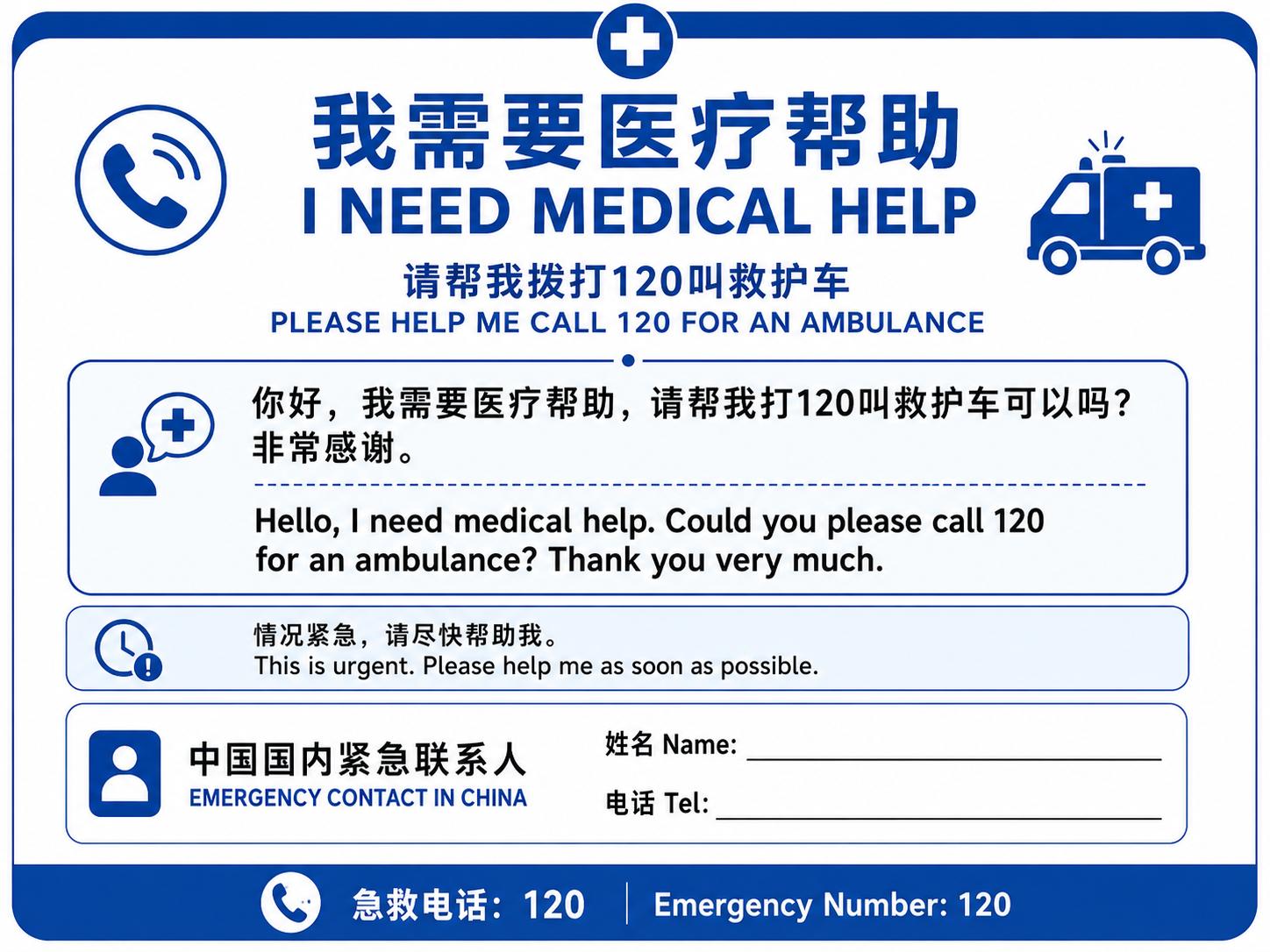
How to use this card:
- Save it to your phone before travelling to China.
- Take a screenshot so it can be opened quickly in an emergency.
- Print a paper copy and keep it with your passport, medication or day bag.
- Fill in the emergency contact section once your China guide, host or coordinator is confirmed.
- Show it immediately if you need medical help and cannot explain your situation clearly.
Together with the allergy and dietary communication cards above, this emergency medical help card adds an extra layer of reassurance and practical support for visitors coming to China.
What Should You Prepare Before Travelling to China With an Allergy?
Speak With Your Doctor
If you have a history of serious reactions, you need to discuss the trip with your doctor or allergy specialist. Ask whether any changes are needed to the existing emergency plan and how medication should be transported or stored.
Carry Enough Medication
Bring enough prescribed medication for the full journey, with additional supplies for possible delays. Keep essential medication in your hand luggage and carry it during sightseeing, train travel and day trips.
Inform the Tour Company in Advance
Provide the exact dietary requirement before arrival. Do not use only general descriptions such as “special diet” or “sensitive stomach.”
- The exact ingredient or food category
- Whether the condition is an allergy, intolerance or other medical restriction
- Whether small amounts or cross-contact are a concern
- Ingredients, sauces and cooking oils that must be avoided
- Suitable meal alternatives
- Emergency contact information
This gives the tour operator time to inform the guide, hotels and restaurants involved in the itinerary.
Tell Your Travelling Companions
At least one companion should know where your medication is kept, which foods must be avoided and who should be contacted in an emergency. For school groups, family tours and organised departures, the group leader should also hold a copy of the relevant information.
Bring Some Suitable Food
Pack a reasonable supply of familiar snacks for flights, long rail journeys or occasions when ingredients cannot be checked.
What Should You Ask Before Eating?
Show the card and ask the restaurant to confirm:
- Does the dish contain the ingredient?
- Is it present in the cooking oil?
- Is it used in the sauce, stock, marinade or seasoning?
- Has the food been fried in shared oil?
- Were shared utensils or cookware used?
- Can the kitchen prepare the dish separately?
- Is the person answering completely certain?
When the restaurant cannot confirm the ingredients or preparation method, choose another dish rather than relying on a guess.
What If Your Allergy Is Not Shown Here?
The five current cards cover common requests, but they cannot represent every allergy, intolerance or dietary condition.
Travellers may also need help communicating requirements involving soy, eggs, sesame, specific tree nuts, milk protein, mustard, certain fruits, particular spices or multiple combined allergies.
If you cannot find a card matching your requirements, contact TravelChinaService before your trip. We can help prepare a clear Chinese-English card based on the information you provide.
The wording can include:
- The exact ingredients to avoid
- Common Chinese foods or sauces that may contain them
- Cross-contact instructions
- Safer meal examples
- The traveller’s name
- A Chinese-speaking emergency contact and telephone number
The final wording should always be checked against advice from the visitor’s doctor or allergy specialist.
What Should You Do in a Medical Emergency in China?
Follow the emergency plan provided by your healthcare professional and use prescribed emergency medication as directed. Do not wait for a guide before beginning the steps in that plan.
The medical emergency number in the Chinese mainland is 120. When calling, provide the exact location, describe the person’s condition and give a working contact number.
The space at the bottom of each translation card can be completed with the name and telephone number of a Chinese-speaking emergency contact.
Food Allergy Information Cited Official Health References
CDC Yellow Book: Severely Allergic Travelers
Food Allergy Research & Education: Shellfish Allergy
Last checked on July 15th 2026