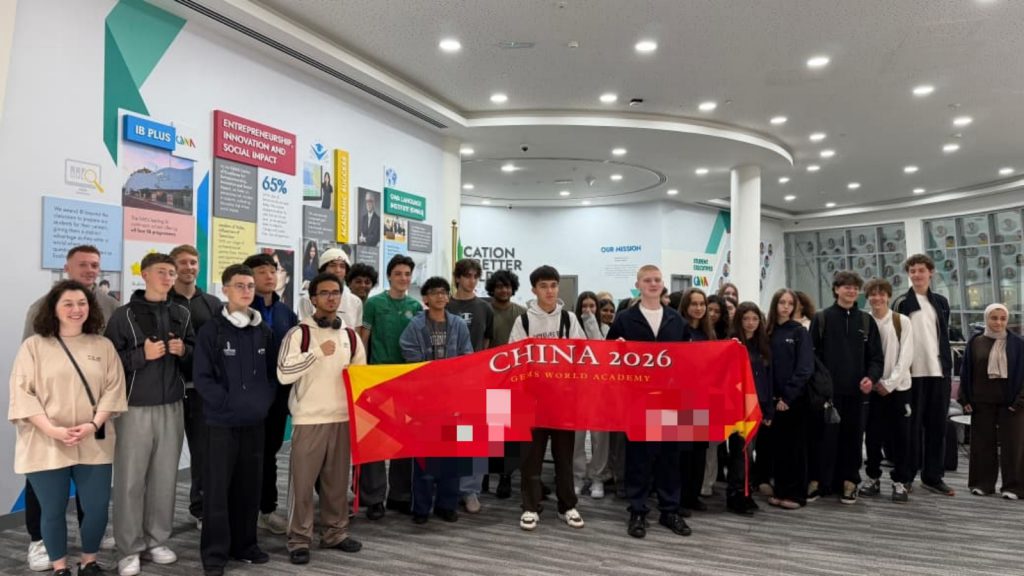
Educational Trip to China for an International School Group from Dubai, UAE
A structured learning journey across China combining culture, history, STEM, and cross-cultural experiences for students from Dubai international schools.
The objective of the journey was not simply sightseeing. The program was designed as an immersive educational experience where students could observe China from multiple perspectives — history, modern development, transportation, urbanization, traditional culture, and everyday local life. The trip aimed to encourage students to move beyond stereotypes and develop a more balanced and firsthand understanding of contemporary China.
The group arrived in Shanghai on Emirates during the afternoon after an overnight international flight from Dubai. Airport arrival procedures, baggage handling, coach coordination, hotel check-in, and student room allocations were carefully managed to ensure a smooth transition after the long-haul journey.
For many students, Shanghai became their first direct impression of China. The city immediately presented a contrast between historical architecture and futuristic urban development. Wide boulevards, elevated highways, dense skylines, digital payment systems, public transportation efficiency, and the scale of the city itself became early discussion topics among the students and teachers.
The group stayed for two nights in Shanghai.
One of the important components of the Shanghai program was a campus visit and educational exchange session. This allowed students to observe differences in academic environments, student life, and educational culture in China compared with international schools in the Middle East and other regions.
The itinerary also included visits to several major cultural and urban landmarks:
At the Shanghai Museum, students explored exhibitions related to Chinese civilization, ancient bronzes, ceramics, calligraphy, and dynastic history. Many students were particularly interested in how Chinese history spans thousands of years while continuing to influence modern society today.
A visit to Shanghai Tower gave the group an entirely different perspective. Looking across the skyline from one of the world’s tallest buildings, students observed the scale of China’s urban development and economic transformation. Conversations naturally emerged regarding architecture, engineering, population density, sustainability, and urban planning.
In the evening, the Huangpu River cruise provided a visual contrast between old and new
Shanghai. On one side stood the historical colonial-era buildings of the Bund, while on the opposite side rose the modern skyscrapers of Pudong. For many students, this became one of the clearest visual examples of how China combines historical legacy with rapid modernization.
To balance the highly modern image of Shanghai, the program also included a full excursion to Zhujiajiao, an ancient water town often referred to as the “Venice of the Orient.”
The experience allowed students to see a slower and more traditional side of life in eastern China. Narrow stone pathways, canals, traditional bridges, local markets, and historic residential architecture created a strong contrast to central Shanghai.
Students walked through old alleyways, interacted with local vendors, observed daily life around the waterways, and learned about the historical role of canal towns in regional trade and transportation before the rise of modern infrastructure.
For many participants, this visit helped broaden their understanding that China is not represented by only megacities and skyscrapers, but also by centuries-old communities that continue to preserve local traditions and lifestyles.
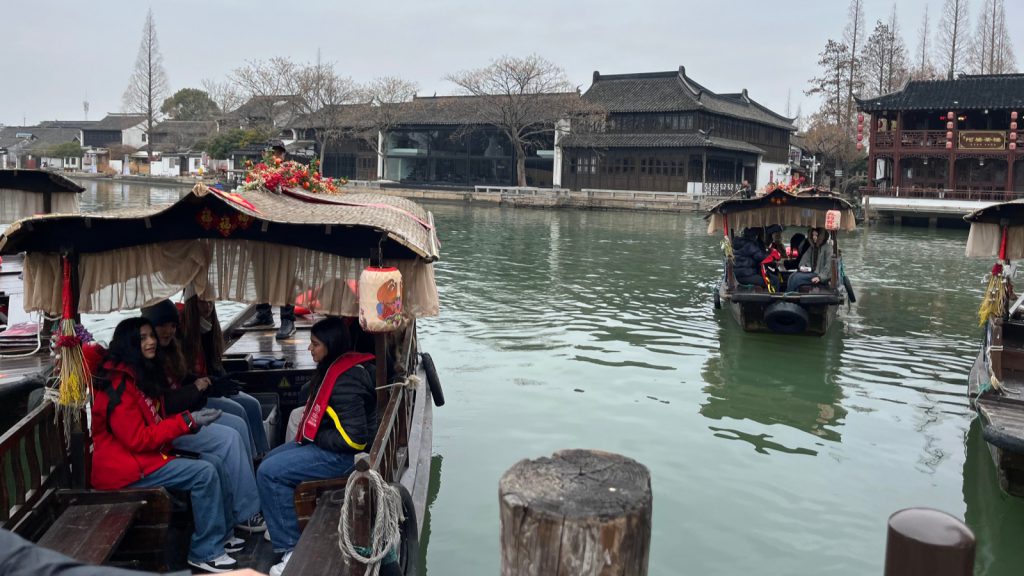
The student group exploring Zhujiajiao Water Town by traditional boat.
After successfully completing the Shanghai section, the group continued to Beijing using China’s high-speed rail network.
The six-hour bullet train journey itself became an educational experience. Students experienced firsthand the efficiency and scale of China’s railway infrastructure while traveling across a significant portion of the country in a relatively short amount of time.
Throughout the journey, students observed changing landscapes through the train windows:
Teachers and students discussed geography, regional development, transportation systems, and the relationship between infrastructure and economic growth.
For many students coming from outside East Asia, this was also their first experience traveling on a high-speed train operating at such scale and speed.
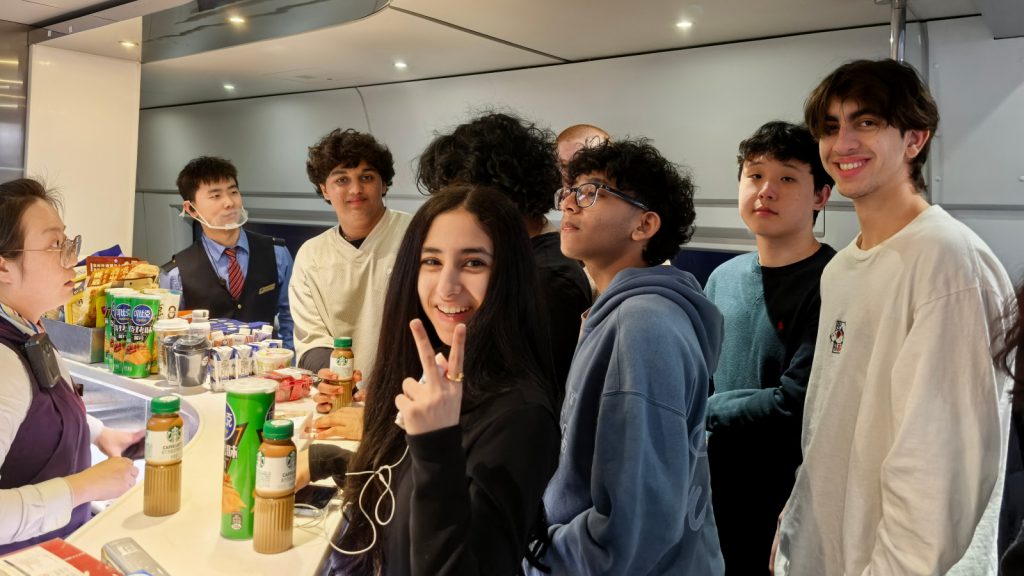
Students are enjoying their high-speed train journey to Beijing.
The group spent three nights in Beijing, focusing primarily on China’s imperial history, political significance, and cultural heritage.
The itinerary included visits to:
Walking through Tiananmen Square and the Forbidden City gave students direct exposure to the scale and symbolism of imperial China. Students learned about dynastic systems, court life, governance structures, architecture, and the cultural significance of these UNESCO-listed heritage sites.
At the Summer Palace, discussions focused on landscape design, imperial leisure culture, and traditional Chinese aesthetics. Meanwhile, the Temple of Heaven introduced students to ancient Chinese cosmology, rituals, and the relationship between political authority and spiritual tradition.
Rather than simply visiting monuments, guides and educators encouraged students to ask questions, compare cultures, and think critically about how history continues to shape modern national identity.
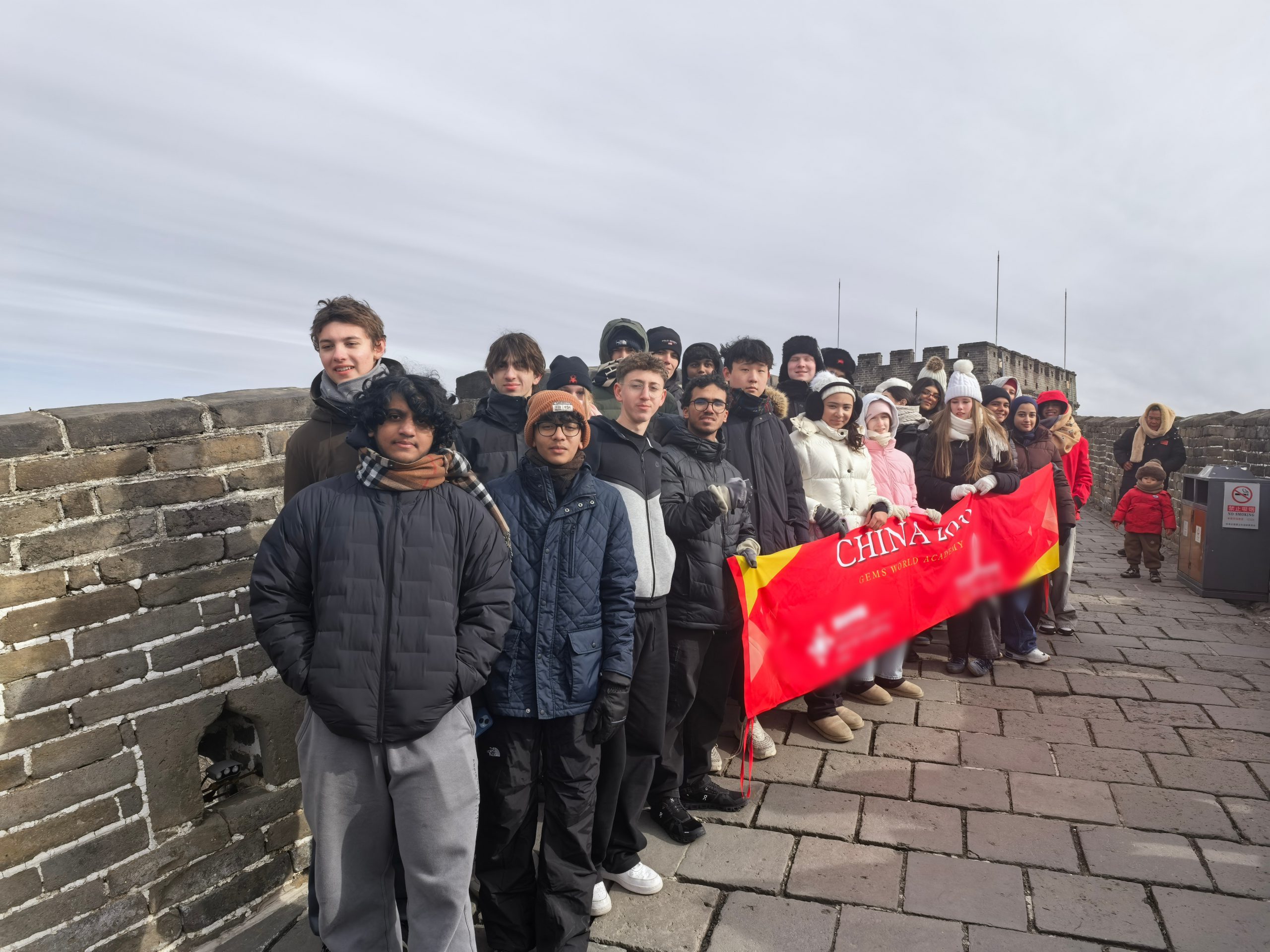
One of the most memorable experiences of the trip was the three-hour hike at the Mutianyu Great Wall section of the Great Wall of China.
The activity combined physical challenge, teamwork, endurance, and historical learning. Students climbed steep stone staircases, crossed watchtowers, and experienced firsthand the immense scale of one of the world’s most recognized historical landmarks.
The hike also created strong group bonding moments among students from different nationalities and backgrounds. Many students described the Great Wall experience as one of the defining highlights of their time in China.
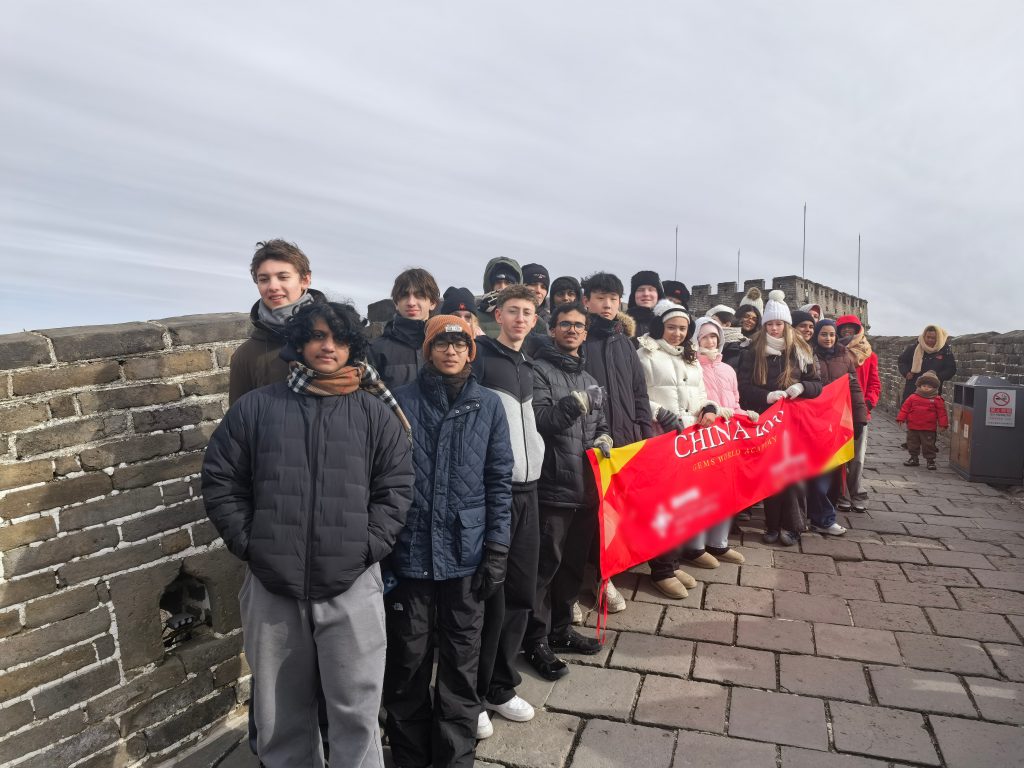
Students are visiting the Mutianyu section of the Great Wall in Beijing, China.
An important educational philosophy behind the program was that understanding China should go beyond monuments, museums, and famous landmarks.
To create a more meaningful cultural exchange, the itinerary also focused on people-to-people interaction and exposure to daily local life.
The group visited traditional hutong residential neighborhoods in Beijing, where students observed how local residents live within older community structures that still exist alongside modern urban development.
Students also participated in Chinese calligraphy workshops, where they learned basic brush techniques and explored the cultural meaning behind Chinese characters and traditional artistic expression.
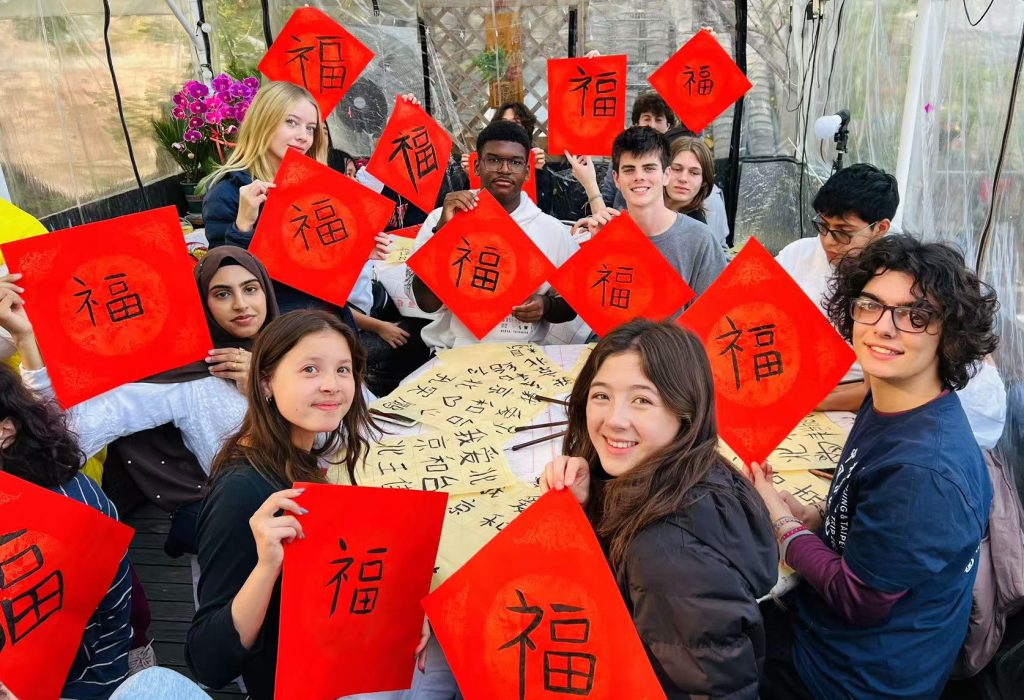
Students learning Chinese calligraphy in Beijing, creating their own “Fu” characters for good fortune.
Meals were another important part of the experience. Rather than relying solely on international-style dining, students were introduced to a variety of local Chinese dishes and regional flavors. Shared meals became opportunities for conversation, cultural discovery, and greater comfort with unfamiliar environments.
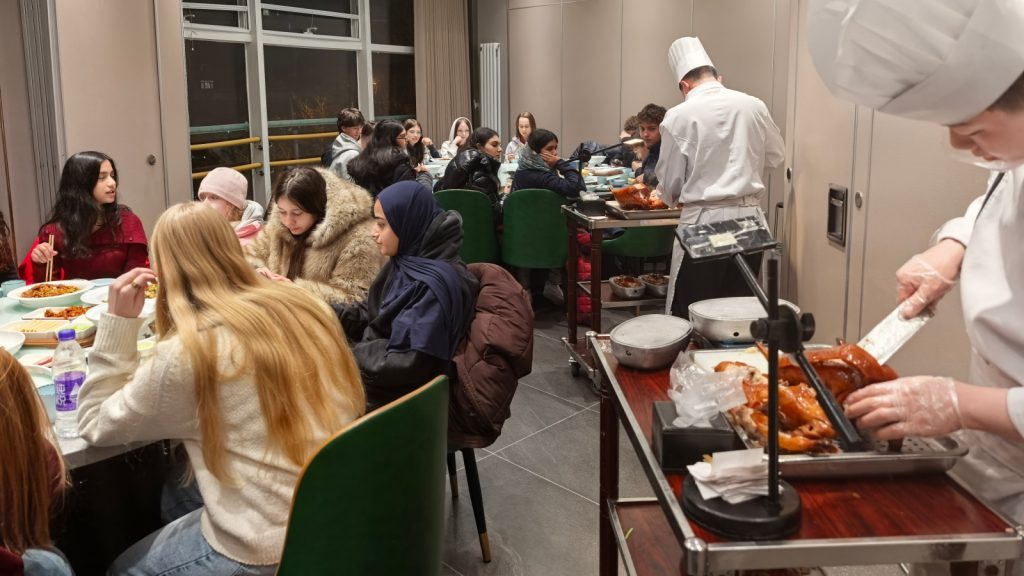
The students enjoying a classic Peking duck dinner in Beijing.
These interactions helped students understand that modern China is not only defined by infrastructure and economic development, but also by ordinary people, family life, traditions, and local communities.
Managing a study trip involving 33 international students across multiple cities required detailed operational planning and coordination.
Our responsibilities included:
Flexibility and contingency planning were also important due to weather conditions, student dietary requirements, varying cultural backgrounds, and the pace required for educational student travel.
Close communication between our operations team, local suppliers, teachers, and accompanying staff helped ensure that the program ran smoothly from arrival to departure.
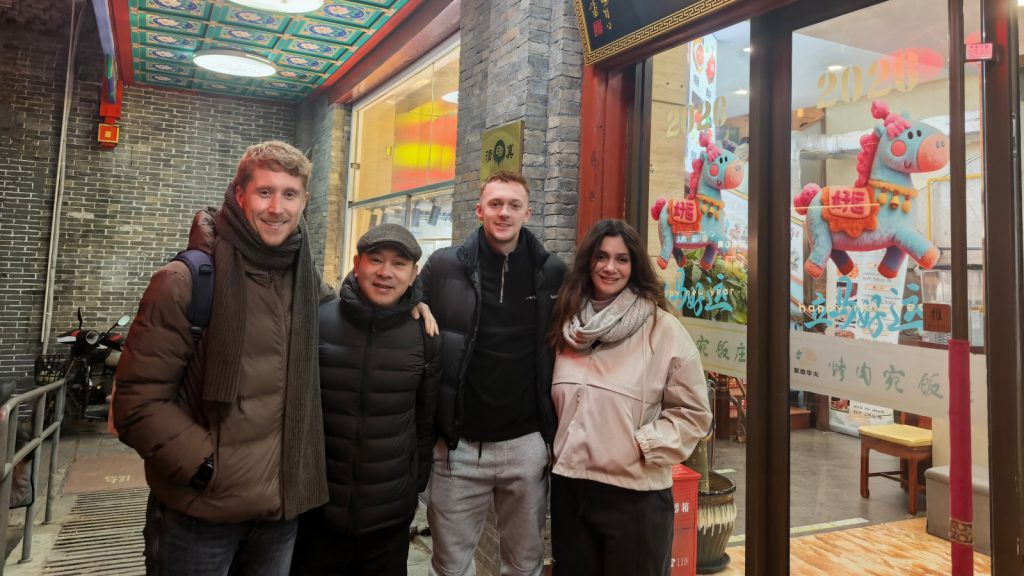
Our chief manager, Leo, accompanied the group throughout the entire trip, staying in close communication with the student group teachers and supervisors.
The study trip concluded successfully in Beijing after six days of travel across China.
For many students, the journey became their first opportunity to experience China directly rather than through media, assumptions, or classroom discussions. Through exposure to history, transportation systems, local communities, education, and cultural interaction, students were able to develop a more nuanced and human understanding of the country.
The program combined:
For the school and its students, the experience created not only academic value, but also broader cultural awareness and international perspective that extended beyond the classroom environment.