Two Nights in Xi’an: A Student Group Travel Case Study

City Wall cycling, Terracotta Army and a hands-on clay warrior workshop

TRIP OVERVIEW

Xi’an Student Group Tour | Two-Night Educational Visit

School trips to China, Bejing, Shanghai, and including a visit to Xi’an gave students different ways to explore China's history, from visiting Terracotta Warriors to taking part in a hands-on activity connected to what they had seen.

30
Students & Staff Members
From
International Student Group
July 2026
Travel Period
Xi’an Student Group Tour | Two-Night Educational Visit

We recently hosted a student group travel in China with a two-night stay in Xi’an. Their program included three different experiences: cycling on the ancient City Wall, visiting the Terracotta Army Museum and making their own clay warriors.

With only two nights in the city, the itinerary needed to leave enough time for the students to experience Xi’an without making each day feel like a series of rushed visits. The activities were therefore kept varied. The City Wall introduced the scale and layout of the old city, while the Terracotta Army visit brought the group closer to the history of the Qin Dynasty. The clay workshop then allowed the students to take part in something practical and connected to what they had seen.

Cycling on the Ancient City Wall

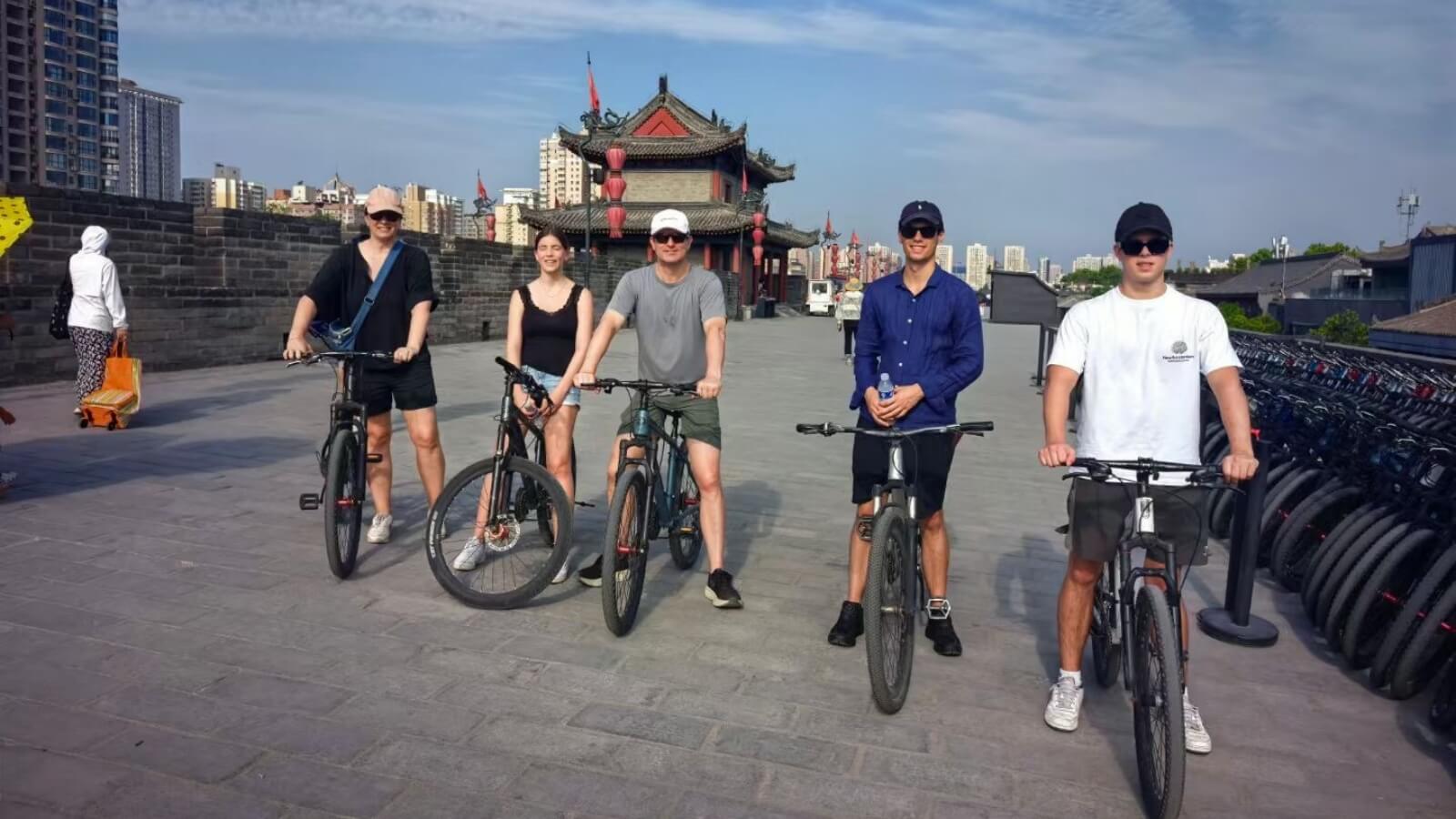
Cycling on the Xi’an City Wall gave the students their first opportunity to see the city from a different perspective.

The wall surrounds the historic centre of Xi’an and provides views of both the older neighbourhoods inside the wall and the modern city beyond it. From the top, students could see the watchtowers, gates and defensive structure while also observing the roads, buildings and daily life below.

Rather than only listening to an explanation about the wall, the students were able to travel along part of it by bicycle. This gave the visit a more relaxed and active character.

Cycling on the ancient City Wall

Cycling on the ancient City Wall

The cycling distance and pace were managed according to the group. There was time to stop, take photographs and look across different parts of the city. For a student group, this was also a useful way to balance historical sightseeing with an outdoor activity.

Visiting the Terracotta Army Museum

The Terracotta Army was the principal historical visit during the group’s stay in Xi’an.

At the museum, the students entered the excavation halls and saw the formations of life-sized warriors and horses. Although photographs of the Terracotta Army are familiar to many students before they arrive, seeing the scale of the pits in person is a different experience.

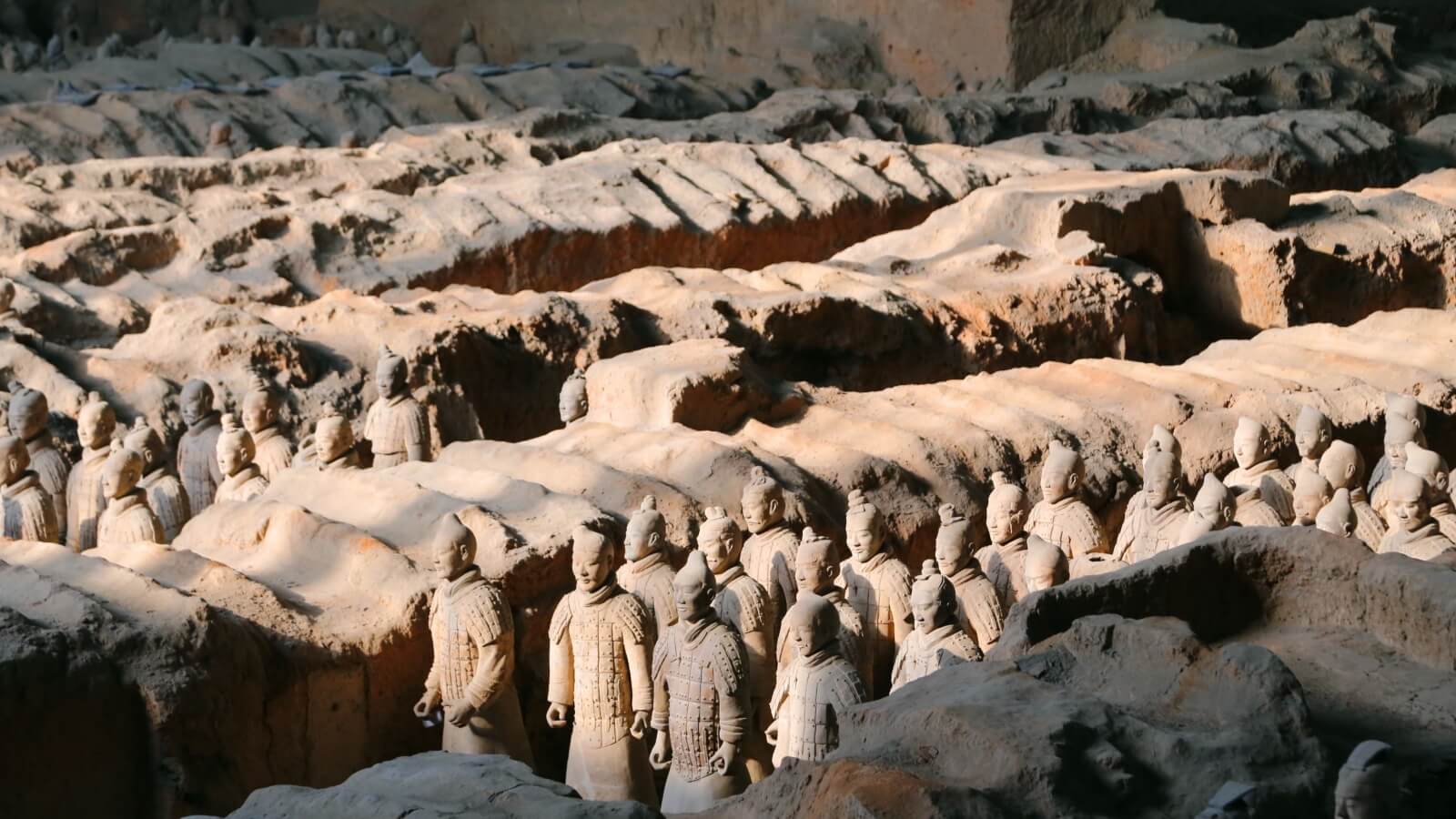
The visit helped the students understand that the figures are not simply a collection of identical clay soldiers. Different warriors represent different military roles, including infantry soldiers, archers, officers and generals. Their hairstyles, armour, clothing, posture and facial details also vary.

Different Terracotta Warriors in Pit 1

Different Terracotta Warriors in Pit 1

The group learned about Qin Shi Huang, the unification of China and the purpose of the emperor’s burial complex. They were also introduced to the work that has taken place since the discovery of the pits, including excavation, the identification of fragments and the restoration of damaged figures.

Many of the warriors were found broken rather than standing in complete formations. Seeing the excavation areas and restoration work gave the students some idea of the time and patience involved in archaeology.

Making Their Own Terracotta Warriors

After seeing the original Terracotta Warriors, the students joined a workshop and made small clay warriors of their own.

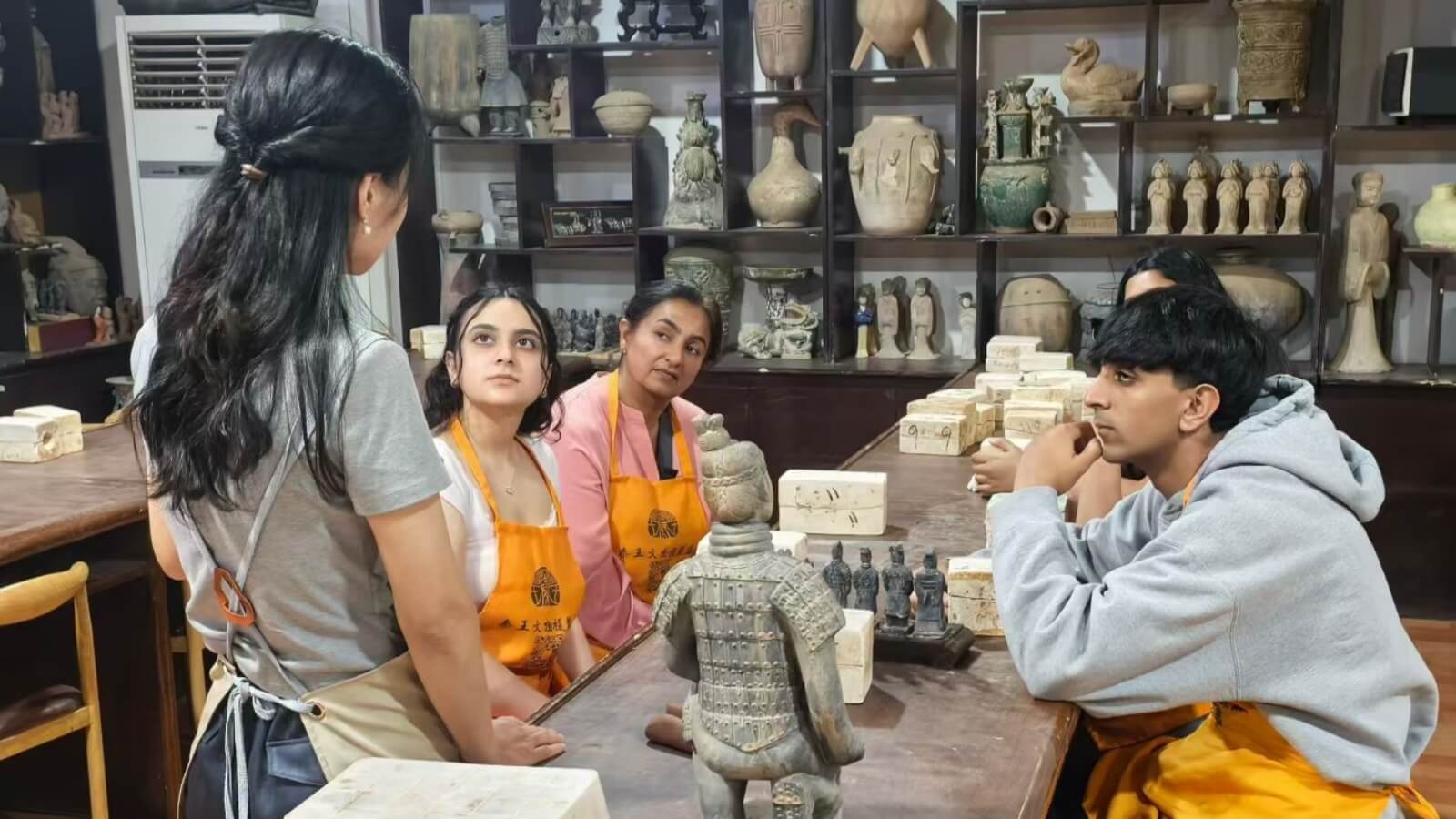
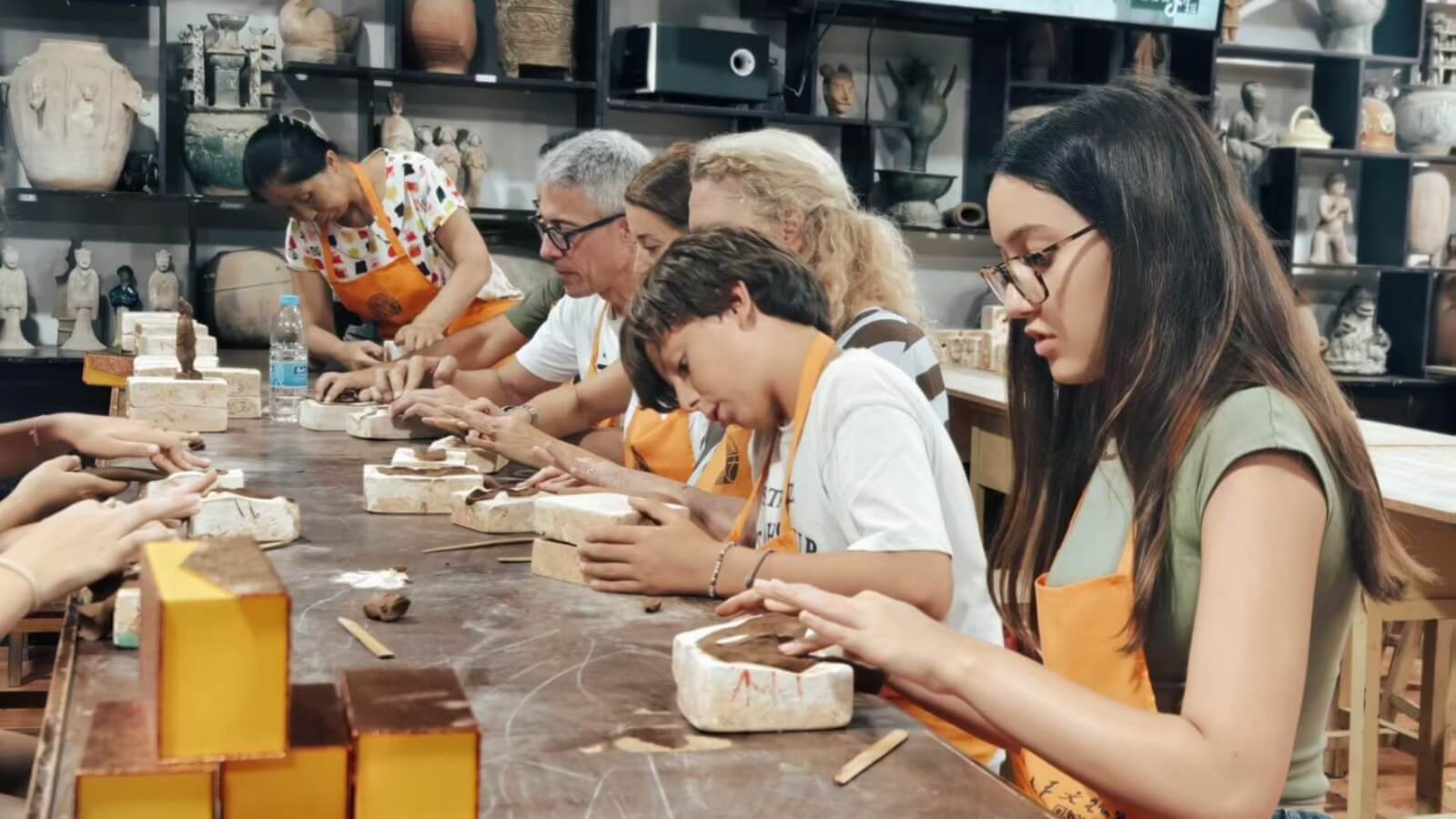
The activity followed a simplified version of the traditional production process. Under the instructor’s guidance, the students prepared the clay, pressed it into moulds and carefully removed the formed sections. They then worked on the shape and surface details of their individual figures.

The workshop instructor is explaining the process to the students

The workshop instructor is explaining the process to the students

This practical activity changed the way the students thought about the museum visit. Once they began handling the clay, they could better understand why different parts of a figure needed to be formed carefully and how easily details could be altered during the process.

Not every finished warrior looked exactly the same. Differences appeared in their shapes, facial details and surface patterns. These small variations made each student’s work individual.

The purpose of the workshop was not to reproduce the full ancient process or create a perfect copy of a museum object. It gave the students an accessible introduction to clay modelling and helped them understand the craftsmanship behind the original figures.

Connecting a Museum Visit with a Practical Activity

The workshop worked particularly well because it was connected directly to the museum visit.

After observing the original warriors, the students could recall details such as armour, hairstyles, body positions and facial expressions while working on their own figures. The activity gave them time to sit together, discuss what they had seen and turn part of that experience into something physical.

Making a small Terracotta Warrior together in a workshop

Making a small Terracotta Warrior together in a workshop

It also made the day feel less like a conventional sightseeing program. The students were not only moving through a historical site and receiving information. They were able to participate, make decisions and see how clay changed as they worked with it.

For some students, the scale of the excavation pits may have been the most memorable part of the day. For others, it may have been the moment when their own clay warrior came out of the mould.

Planning a Two-Night Student Stay in Xi’an

A two-night stay does not provide time to see every historical site in Xi’an, but it can still offer a balanced introduction to the city.

For this school trip to China, the activities were deliberately different from one another. Cycling provided movement and an open view of the city. The Terracotta Army Museum provided the main historical and archaeological content. The clay workshop gave students a hands-on cultural experience.

The order and timing of these activities also mattered. Museum reservations, travel time to the Lintong area, meals, workshop arrangements and the students’ energy levels all needed to be considered.

As a China tour operator working with overseas student groups, we also need to consider the practical details around each activity. These may include bicycle arrangements, group supervision, English-language explanations, workshop capacity and the packaging of completed clay figures.

When these details are arranged in advance, a short stay can still feel comfortable and complete.

A Short Stay with Different Ways to Experience Xi’an

During their two nights in Xi’an, the students experienced the city in three ways.

They looked across it from the top of the ancient City Wall. They stood inside the museum halls and saw the Terracotta Army in its archaeological setting. They then sat down together and made clay warriors of their own.

Each activity showed a different side of Xi’an, but they remained connected by the history of the city.

The group did not only leave Xi’an with photographs of the places they had visited. They also left with a small object they had made themselves and a clearer understanding of the work behind an important archaeological discovery in China.

MAKE AN INQUIRY
TOP