Why Use These Itineraries?
This 10-day Silk Road journey offers a carefully curated experience across China’s historic Gansu province, connecting Xi’an, Tianshui, Lanzhou, Xiahe, Jiayuguan, and Dunhuang. Designed for travelers seeking a seamless blend of cultural discovery, natural landscapes, and historical depth, this itinerary highlights key Silk Road treasures while ensuring comfort and efficiency. From the awe-inspiring Terracotta Warriors in Xi’an to the cliffside Maijishan Grottoes, from the spiritual heart of Labrang Monastery to the desert vistas of Dunhuang, travelers gain first-hand insight into China’s ancient trade routes, religious traditions, and vibrant local cultures. This itinerary is ideal for travel agents or tour operators who want to offer clients a rich, structured Silk Road experience, capturing both the grandeur of China's history and the authenticity of local life.
Highlights
- Marvel at the life-sized army of Emperor Qin Shi Huang and walk along the historic city walls.
- Explore cliffside Buddhist sculptures and ancient spiritual sites.
- Experience Tibetan culture, vibrant murals, and serene highland landscapes.
- Visit the westernmost fortress of the Great Wall and learn about its strategic history.
- Discover Crescent Spring and Echo Sand Mountain, and explore the vibrant Shazhou Night Market.
Detailed Itinerary
-
Welcome to Xi'an, an ancient capital of 13 dynasties and the starting point of the Silk Road.
Your guide and driver will welcome you at the baggage claim area and transfer you to your hotel in the city center. Settle in and prepare for the adventure ahead.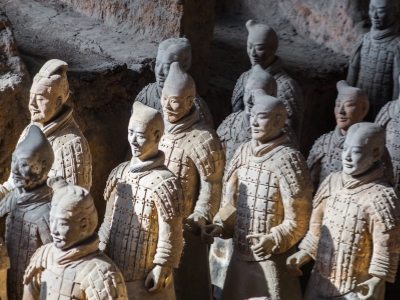
Terracotta Warriors Museum Begin your exploration of Xi'an's rich history with a visit to the Terracotta Warriors, the vast underground army built over 2,000 years ago to protect Emperor Qin Shi Huang in the afterlife. Your private guide will share insights into this awe-inspiring archaeological site.
Later, return to the city and stroll along the Ancient City Wall, one of the best-preserved fortifications in China, offering panoramic views of the city.
Finish the day at Muslim Street, sample Xi'an's signature snacks and enjoy a taste of the city's culinary heritage.Optional: Rent a tandem bike for a playful spin along the walls
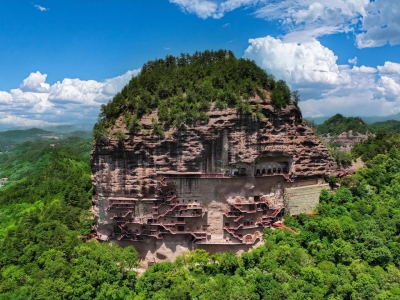
Maijishan Grottoes After breakfast, take a high-speed train to Tianshui, a key Silk Road hub.
Visit the Maijishan Grottoes, known for its stunning cliffside wooden paths and intricate Buddhist sculptures and murals. Then, explore Fuxi Temple, dedicated to the legendary ancestor of Chinese civilization. The temple's peaceful courtyards, ancient cypress trees, and traditional architecture offer insight into China's early cultural roots and philosophies.
In the evening, stroll through Tianshui's old town, tasting local delicacies while observing the city's slower pace.
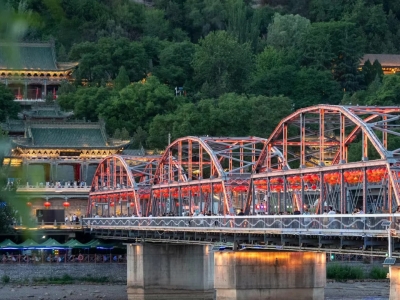
Zhongshan Brigde Today, continue westward to Lanzhou, the capital of Gansu Province.
Your exploration begins at the iconic Yellow River Iron Bridge, the city's most recognizable landmark and an enduring symbol of Lanzhou's connection to trade and transportation throughout history.
Next, ride a cable car up to White Pagoda Hill, where traditional pavilions, quiet gardens, and temples overlook the winding Yellow River below. From the top, enjoy sweeping panoramic views of Lanzhou's skyline framed by surrounding mountains.
In the evening, experience Lanzhou's most famous culinary tradition: hand-pulled beef noodles. Watching local chefs hand-pull noodles into delicate strands is as memorable as the meal itself.
Tips: White Pagoda Hill is especially beautiful in the late afternoon when the city lights begin to glow.
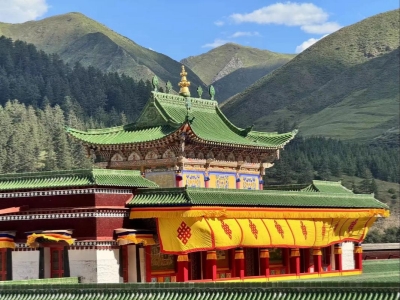
Labrang Monastery Arrive in Xiahe, a culturally rich town known for its strong Tibetan heritage and spiritual atmosphere. Your first stop is the famous Labrang Monastery, one of the most influential Tibetan Buddhist monasteries outside Tibet.
As you walk through long corridors lined with prayer wheels and colorful murals, you'll encounter chanting monks, devoted pilgrims, and the deeply spiritual rhythm of monastic life. Your guide will explain Tibetan Buddhist traditions, daily rituals, and the monastery's role in regional culture.
In the afternoon, travel to the beautiful Sangke Grassland, where endless green meadows stretch beneath open skies. Local nomadic families continue traditions passed down for generations.
Tips: Xiahe sits at a higher altitude, so walk slowly and stay hydrated.
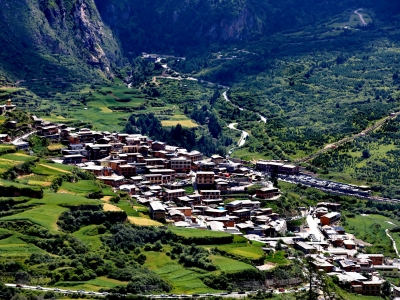
Zhagana Village Begin the day with a visit to a traditional Tibetan village, where local artisans create intricate Thangka paintings using natural pigments and centuries-old techniques. These detailed religious artworks reflect the deep spiritual traditions of Tibetan Buddhism.
Later, drive back to Lanzhou and board a high-speed train heading west across the vast Gobi Desert. Along the way, enjoy dramatic desert scenery, distant mountains, and endless open landscapes once traveled by Silk Road caravans.
Arrive in Jiayuguan in the evening and transfer to your hotel.
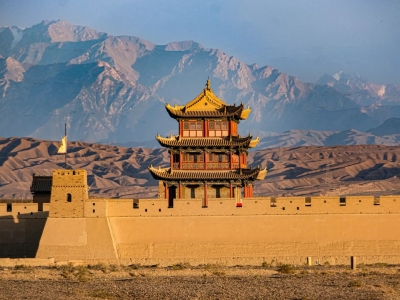
Jiayuguan Today, discover Jiayuguan, the western end of the Great Wall and one of the most important military strongholds of ancient China.
Start at Jiayuguan Fort, an imposing desert fortress that once protected the empire's frontier. Walking along the ancient walls and gates, you can imagine camel caravans, merchants, and soldiers crossing this strategic passage centuries ago. Continue to the Great Wall Museum, where exhibits and artifacts explain the construction, defense systems, and cultural significance of the Great Wall throughout Chinese history.
Later, visit the Wei and Jin Dynasty Mural Museum, home to remarkably preserved underground tomb murals that vividly depict scenes of daily life, music, travel, and ancient customs.
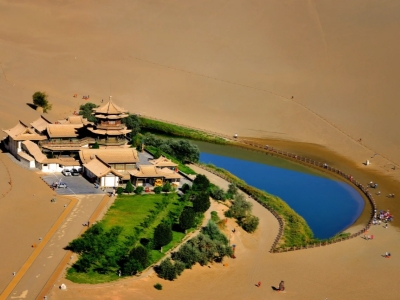
Crescent Spring We travel west across the Gobi Desert for 4.5 hours to reach Dunhuang, a legendary oasis city.
After arrival, head to Crescent Spring and Echo Sand Mountain, one of Dunhuang's most iconic natural landscapes. Towering golden dunes surround a crescent-shaped oasis lake that has survived in the desert for centuries.
You may choose to ride a camel through the dunes, try sandboarding, or simply climb the dunes for panoramic desert views. As the sun begins to set, the desert glows in rich shades of gold and orange.
In the evening, visit the lively Shazhou Night Market, where colorful lanterns, sizzling street food, local music, and handmade crafts create an unforgettable atmosphere.
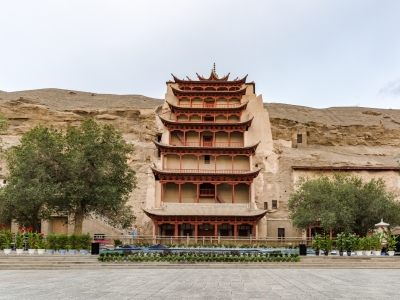
Mogao Grottoes Today, explore the world-renowned Mogao Grottoes, often called the "Louvre of the East." This UNESCO World Heritage Site preserves one of the world's greatest collections of Buddhist art.
Hidden within the cliffs are hundreds of cave temples filled with colorful murals, painted ceilings, and finely crafted statues spanning more than a thousand years. Your guide will explain the stories behind the artwork and how Dunhuang became a major cultural crossroads linking China, Central Asia, and the Middle East.
In the afternoon, continue to the Dunhuang Museum, where ancient manuscripts, silk textiles, pottery, and trade relics reveal the city's important role in Silk Road history.
Notice: Photography inside the Mogao caves is generally prohibited to help preserve the artwork.
After breakfast, your driver will meet you at the hotel lobby and transfer you to the airport or train station for your onward journey.
MAKE AN INQUIRY TOP