10-Day China Group Tour Case Study: Shanghai, Zhangjiajie, Xian and Beijing
A 10-day China group tour for a European travel partner with smooth multi-city operations and full ground handling support.
Planning for this program started in August 2025. The request from our overseas partner was straightforward: prepare a China itinerary that could give clients a broad first impression of the country within 10 days.
After comparing different city combinations and transport options, the final plan was confirmed as:
Shanghai – Zhangjiajie – Xian – Beijing
A 10-day China group tour cannot include everything. The key is to choose destinations that serve different purposes, rather than repeating the same type of experience in every city.
With this in consideration, the route was built around four different impressions of China.
Shanghai introduced the modern side of China.
The Avatar mountains in Zhangjiajie brought in dramatic natural scenery.
Xian gave the trip historical depth.
Beijing completed the program with China’s most recognized imperial landmarks.
This structure made the itinerary feel complete without becoming too heavy. It avoided the common problem of adding too many cities simply to make the tour look rich on paper.
Shanghai was chosen as the entry city because it is easy for international arrivals and gives visitors an immediate sense of modern China.
The first sightseeing day included Yu Garden, Jade Buddha Temple, The Bund, and Nanjing Road. These sites gave a compact but useful introduction to Shanghai: classical garden design, Buddhist culture, historic waterfront buildings, skyline views, and commercial street life.
Starting here also made the first stage easier from an operations point of view. After a long international flight, the first day was kept simple, with airport arrival and hotel transfer only. This helped the clients rest before the full sightseeing program began.
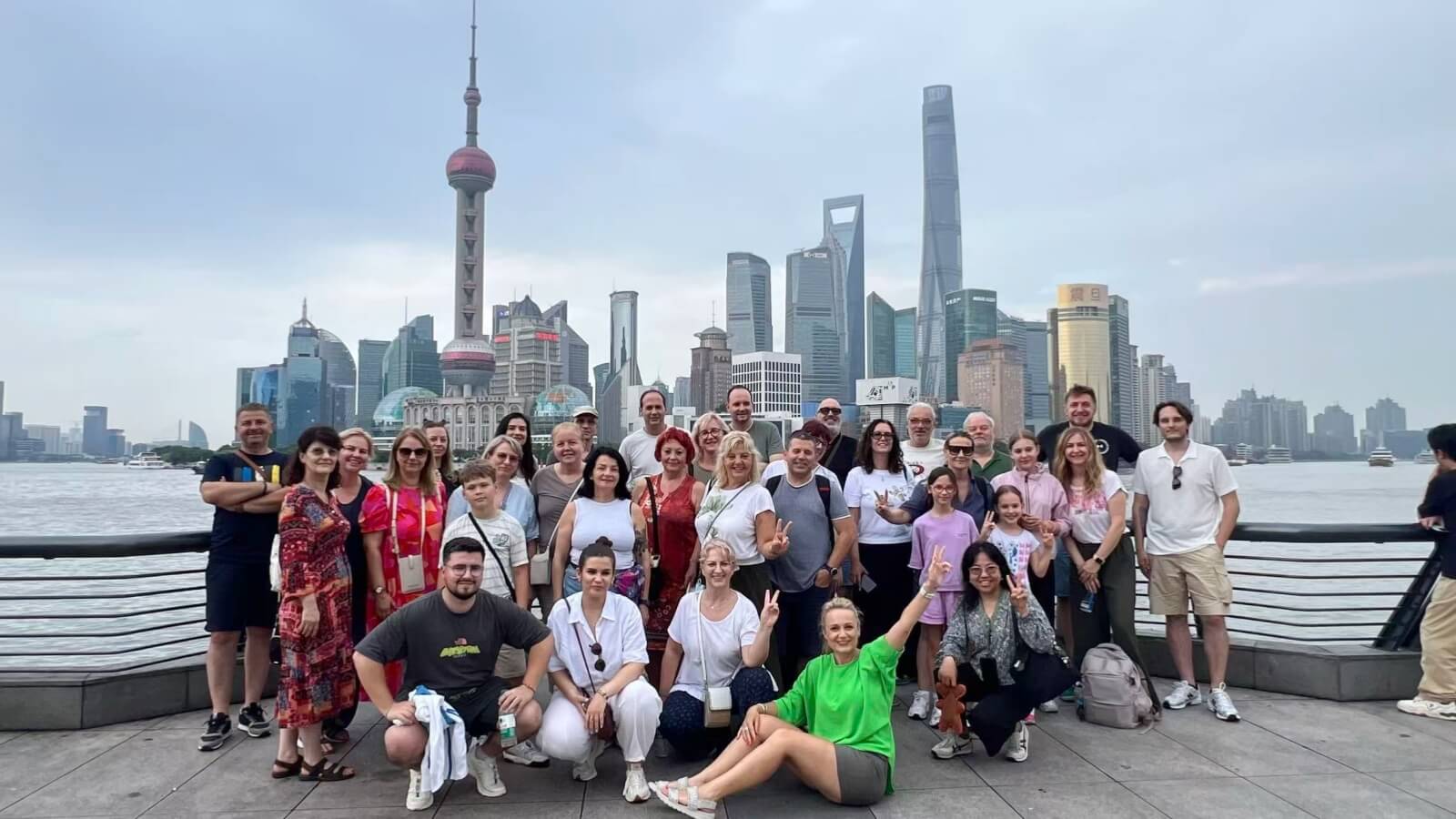
Clients got their group photo taken on the Bund in Shanghai.
Zhangjiajie was added not only because the itinerary needed a strong natural highlight, but also the avatar mountains here is becoming one of the most popular destinations for visitors traveling to China.
After Shanghai’s city views and urban rhythm, Zhangjiajie changed the feeling of the trip. The mountain scenery, sandstone pillars, forest park areas, Bailong Elevator, Tianzi Mountain, Yellow Stone Village, and Golden Whip Stream gave the clients a completely different visual experience.
For first-time visitors, this part of China often feels unexpected. It is not the China they usually imagine from Beijing, Shanghai, or Xian. That contrast made Zhangjiajie valuable in the overall design.
It also required careful planning. Scenic areas in Zhangjiajie often involve shuttle buses, elevators, cable cars, walking routes, and weather-related changes. For a group of 34 people, timing and movement had to be realistic from the start.
Xian became the historical center of this trip to China.
The main visit was the Terracotta Army, but the city was not treated as a single-attraction stop. The Muslim Quarter and Great Mosque added a local cultural layer, showing Xian’s long connection with the Silk Road, trade, food culture, and religious heritage.
The day ended with a Tang Dynasty cultural show with dinner, giving the evening a structured activity after sightseeing.
This combination worked better than only visiting the Terracotta Army and moving on. It gave the clients a fuller understanding of Xian as an ancient capital and a living city with its own local character.
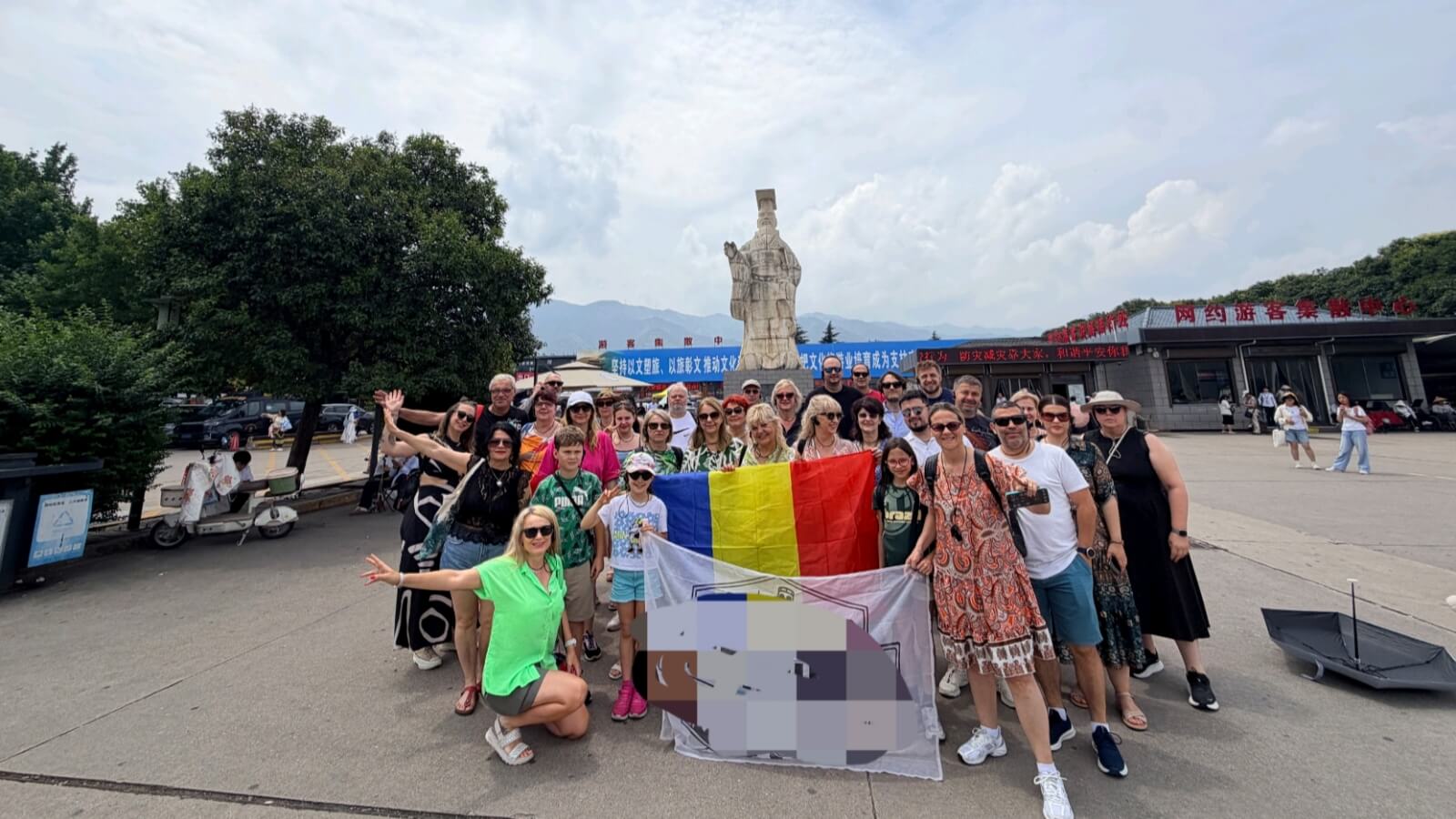
In front of Qin emperor staute at the Terracotta Warriors Museum in Xi’an.
Beijing was placed at the end because it gave the journey a strong closing chapter.
The Beijing section included Badaling Great Wall, Sacred Way of Ming Tombs, Summer Palace, Tiananmen Square, Forbidden City, Temple of Heaven, and a Hutong rickshaw experience.
These sites are important for many first-time visitors because they represent China’s imperial history and national landmarks. Ending the trip in Beijing also gave the whole trip a clear progression: from modern Shanghai, to scenic Zhangjiajie, to ancient Xian, and finally to the capital.
The Hutong visit was useful because it softened the pace after several large historical sites. Instead of ending only with monuments, it gave clients a closer look at local neighborhood life.
The confirmed ground services included:
English-speaking local guides, private coach and driver service, airport transfers, entrance tickets, Zhangjiajie elevator and cable car arrangements, first-class high-speed train tickets from Xian to Beijing, luggage support during the rail transfer, bottled water, traveler insurance, taxes, tolls, parking fees, and a clear quotation and payment schedule.
This service list appeared once in the planning documents, but the more important work was making sure each part connected properly during the actual trip.
The clients flew from Europe, and arrived at Shanghai Pudong Airport, they were welcomed by our local guide, and transferred to the hotel by private coach. No sightseeing was added on arrival day, which was the right decision after a long international flight.
Sightseeing today covered Yu Garden, Jade Buddha Temple, The Bund, and Nanjing Road.
The schedule moved from traditional culture to modern city views. It was not too heavy, but still gave enough content for a meaningful day.
The morning was left open before the evening flight to Zhangjiajie. This avoided unnecessary pressure before a domestic flight.
After arrival, our local team handled the transfer directly to the hotel.
This day focused on Zhangjiajie’s mountain scenery, including Yuanjiajie Scenic Area, Bailong Elevator, Tianzi Mountain Nature Reserve, and Zhangjiajie Grand Canyon.
For many clients, this was one of the most memorable parts of the trip because the landscape felt so different from Shanghai.
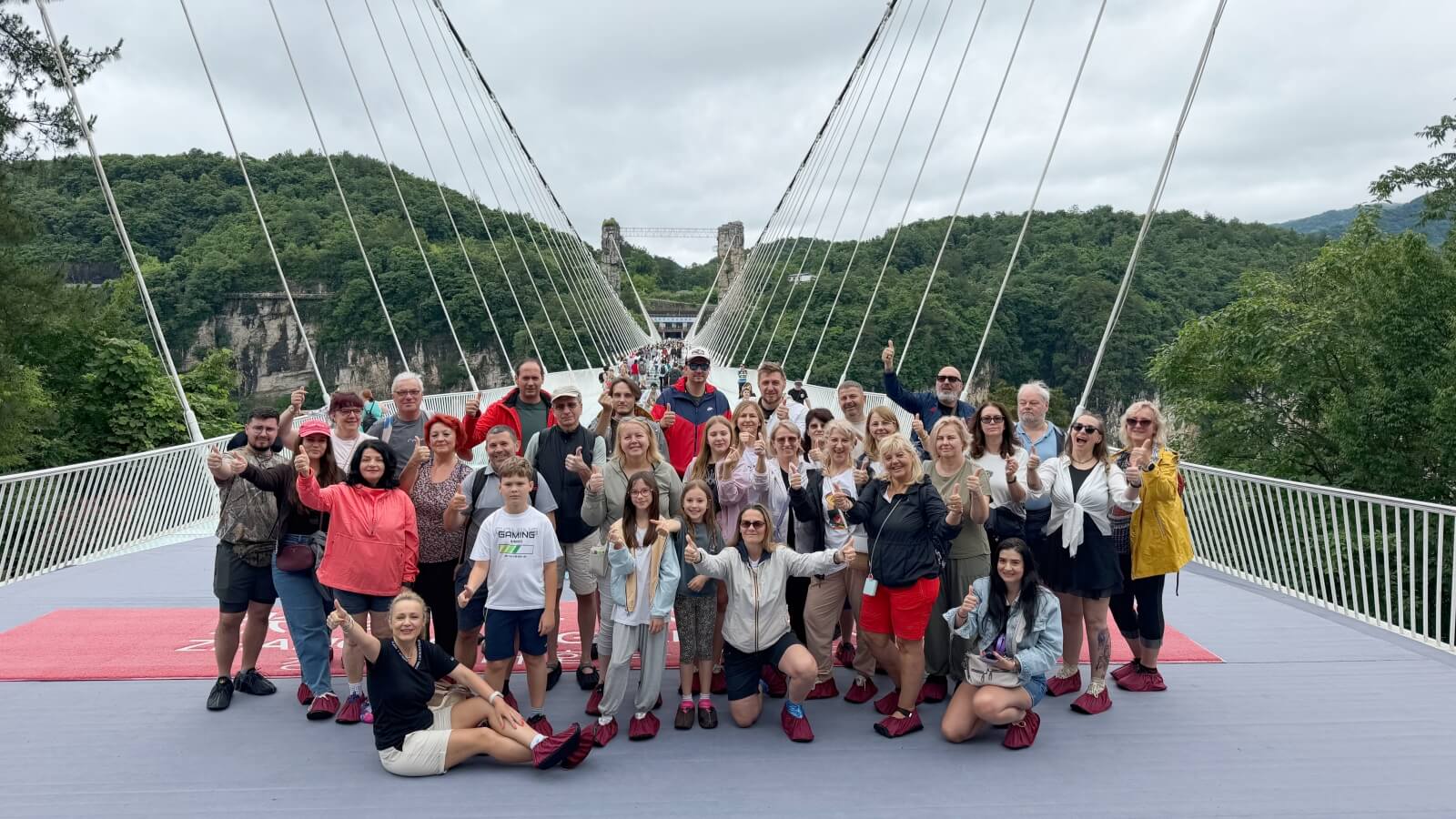
A cheerful visit to the Glass Bridge at Grand Canyon Zhangjiajie
The sightseeing continued with Zhangjiajie National Forest Park, Yellow Stone Village, and Golden Whip Stream Valley.
Later in the day, the group flew to Xi’an. The flight arrived at almost midnight due to the weather on this day, so the transfer plan had to be direct and simple. Hotel check-in, vehicle arrangement, and guide communication were prepared in advance.
Our clients bid a farewell to the guide, and ready to fly to Xian
Xian brought the trip into ancient history.
We went to visit the Terracotta Army, Muslim Quarter, Great Mosque, and Tang Dynasty cultural show with dinner. This gave the city visit more depth, combining a world-famous heritage site with local streets and Silk Road culture.
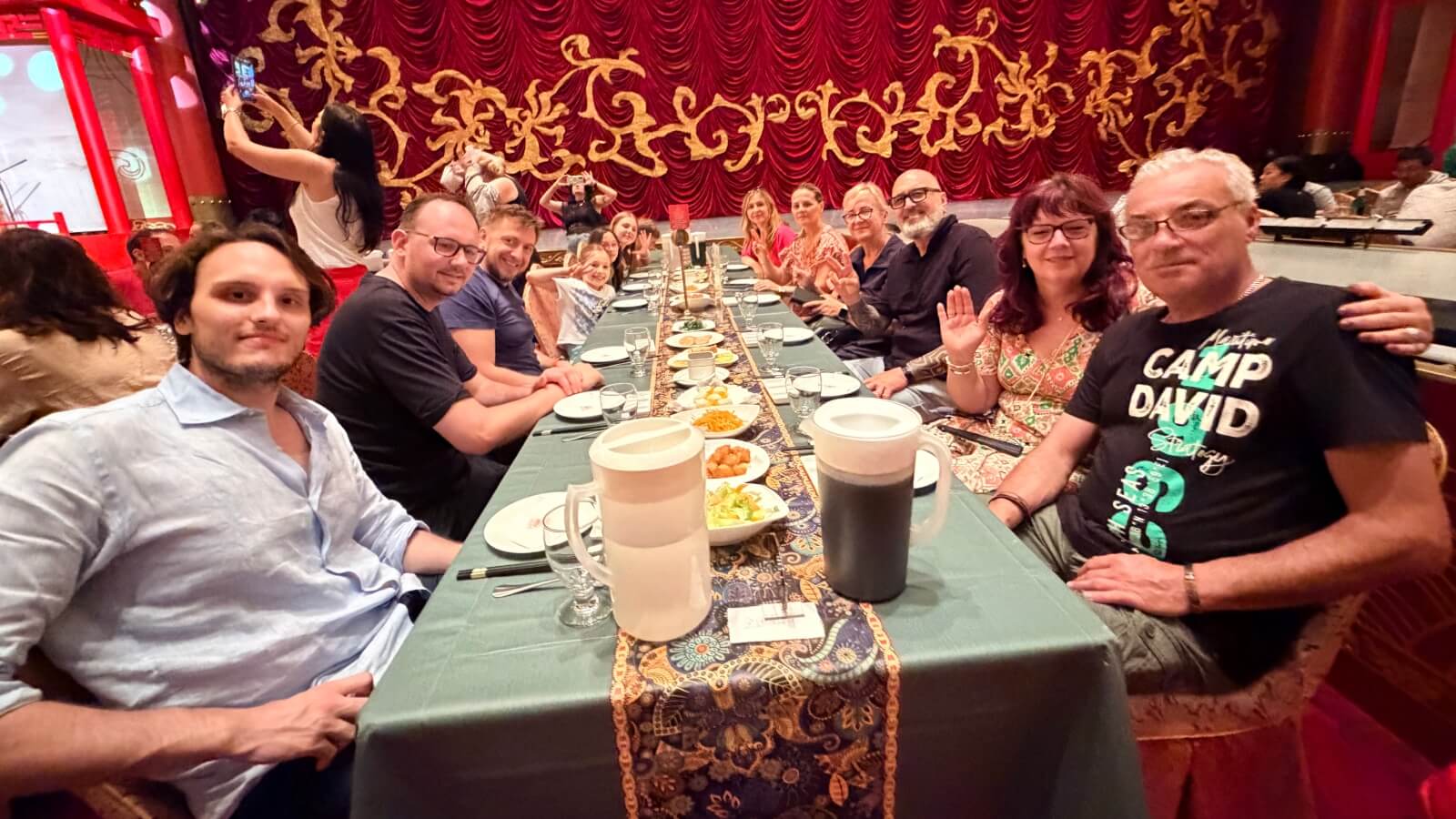
Enjoy the Tang dynasty music & dance show with dinner in Xian
The group traveled from Xian to Beijing by first-class high-speed train.
For 34 people, a rail transfer is never just about buying tickets. Luggage, station entry, security checks, platform access, and boarding all need to move in order. After arrival in Beijing, the group transferred to the hotel by private coach.
Saying goodbye to our local guide before boarding the high-speed train from Xi’an to Beijing.
The Beijing tour started with Badaling Great Wall, followed by the Sacred Way and Summer Palace.
This was one of the key sightseeing days. The Great Wall gave clients the landmark experience they expected, while the Summer Palace added imperial garden culture.
The day included Tiananmen Square, Forbidden City, Temple of Heaven, and a Hutong rickshaw ride.
Because the main sites were large and historical, the Hutong visit helped bring the pace closer to daily Beijing life.
Getting ready for experiencing Beijing Hutong rickshaw ride.
The final day was kept flexible, with time for rest, local dining, or personal exploration before the airport transfer.
After several days of movement and sightseeing, this lighter ending made the departure day more comfortable.
The main difficulty was not the number of attractions. It was the movement between places.
As a multi-city complex program, this itinerary involved international arrival handling, domestic flights, late-night arrival in Xian, mountain area access in Zhangjiajie, a high-speed rail transfer, and busy sightseeing days in Beijing.
Each part needed timing control, ticket preparation, coach scheduling, guide communication, and luggage support.
Zhangjiajie required particular attention because the scenic areas involve multiple transport layers inside the park. Beijing also needed careful pacing because visitor flow at major sites can affect the day.
A written itinerary may look simple, but the real test for a China tour operator is whether transfers, tickets, guides, vehicles, and timing work properly once the tour is underway.
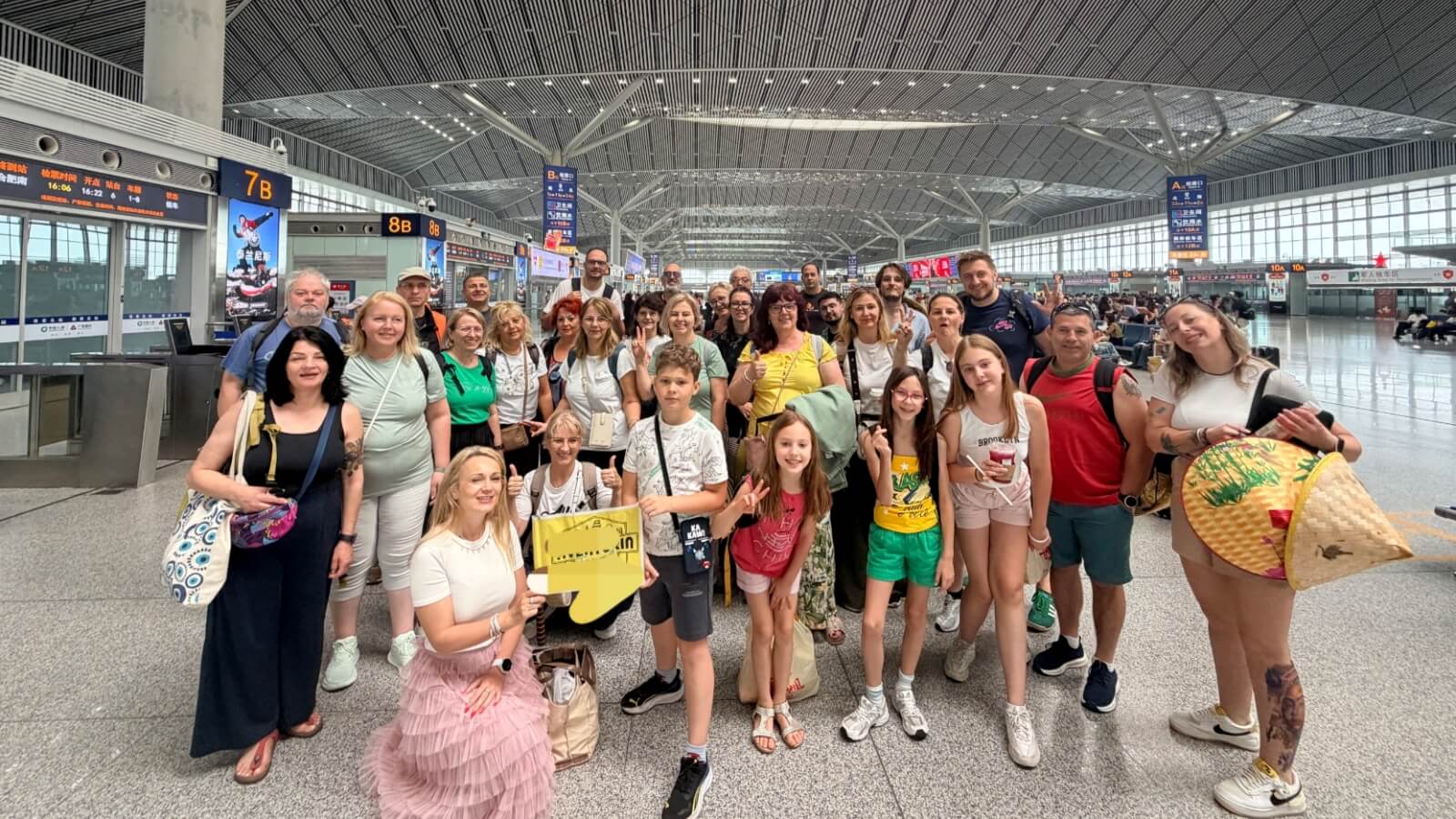
At Xi’an North Railway Station, our guests gathered for a group photo before taking high-speed train to Beijing.
Following our no shopping policy, this tour was operated without tourist shopping stops.
Our quotation clearly listed what was included and excluded. No commission-based retail visits or mandatory shopping arrangements were added to the entire trip.
This helped keep the experience focused on sightseeing, culture, scenery, and local discovery. It also made the program easier for our partner to promote in their market, because the clients received what had been promised in the itinerary.
The final result was a balanced China group tour: varied, practical, and not dependent on shopping stops.
For partners planning similar programs, the idea is simple. A strong China itinerary is not only about famous attractions. It depends on route logic, realistic timing, local coordination, and whether the experience on the ground matches what has been promised before the trip.